






How to Run Downhill: A Trail Running Technique Guide
Trail descents aren't just about letting gravity do the work. Steep slopes, loose stones and wet ground make speed and footing harder to control. Short steps, a relaxed posture and a clear view ahead keep you balanced and let you adjust as conditions change.
This guide covers posture, stride and pace on descents, footwork for different surfaces, and strength work for trail running. It also flags the common mistakes that make downhill sections harder to control.
Why Is Downhill Running So Challenging?
Gravity feels exhilarating until the grade steepens and your legs start absorbing the impact of every stride. Understanding how downhill running works makes it clear why descending taxes your body far more than climbing does.
The Impact of Gravity on Downhill Running
Gravity keeps pulling your weight down the slope. Instead of driving yourself forward like you do on flat ground, you're managing extra momentum on the way down. Let your alignment drift even slightly out of sync with the grade, and you'll bounce between losing control and jerking to a stop.
The Increased Impact on Your Legs
Downhill running makes your legs work harder to control all that forward momentum. Your quads are doing the heavy lifting, slowing you down and keeping you stable with every step, especially on steep or fast descents. That’s why your thighs can be sore afterward, particularly if you’re new to downhill running or you’ve ramped up your training too fast. How much strain you feel depends on the slope, your pace, the distance, and how conditioned you are.
The Role of Terrain and Speed in Downhill Control
Faster running gives you less time to react to roots, loose rocks, holes, and slick spots. Keep your eyes on the trail ahead and adjust your pace before you hit tricky sections. If you can't see where you're going to land or pick a stable line, slow down or walk.
The Need for a Different Downhill Running Technique
Downhill running demands steady footwork and constant tweaks to pace and stride. Leaning back or reaching forward on each step throws off your balance. Keep your steps light and your pace comfortable so you can react to the trail.

How to Run Downhill With Better Control?
Stay loose, take short steps, and run at a pace that lets you scan the trail and react to changes in the surface.
Maintaining a Balanced Body Position
Keep your upper body relaxed. Don't lean too far back or let your feet get way out in front of you. A slight forward lean from the ankles can feel comfortable on a runnable slope, but stay upright enough to keep your balance. Let your arms swing naturally for stability, especially on uneven ground.
Looking Ahead and Choosing Your Line
Keep your eyes ahead for changes in the trail, and glance down when you need to place your feet. Pick a line with solid footing and room to adjust. How far ahead you look depends on your speed, visibility, and the terrain.
Shortening Your Stride and Increasing Cadence
Use short, light steps instead of reaching forward with long strides. A slightly quicker rhythm may help you stay balanced on a runnable descent, but do not force a high cadence. Short steps make it easier to adjust your footing, while a secure heel fit helps prevent your foot from sliding forward on descents, a problem addressed by how to lace running shoes to prevent heel slip on trails and downhills.
Controlling Speed on Steep Descents
On a steep descent, avoid trying to stop your momentum with a stiff, reaching step. Shorten your stride and slow down before the slope becomes difficult to manage; the same principles used to pace yourself when running help you manage effort across changing terrain. Use turns only where the trail is wide enough and the surface is stable; narrow edges and grassy banks may conceal loose ground, holes or steep drop-offs. Walk if you cannot keep your footing.
How to Adjust Your Technique for Different Terrain?
Change your pace and foot placement to match the surface. When footing is uncertain, prioritise balance over speed.
|
Terrain type |
Footwork |
Posture |
Main focus |
|
Rocky and technical |
Take short steps and place each foot carefully |
Stay relaxed, with arms free to help with balance |
Choose stable contact points and slow down when needed |
|
Loose gravel or scree |
Use short steps and avoid sudden turns |
Keep your knees soft and your weight balanced |
Expect the surface to shift; walk if you cannot stay in control |
|
Wet mud or boggy ground |
Avoid abrupt stops and sharp lateral cuts |
Stay relaxed and keep your steps controlled |
Look for firmer ground without stepping onto hidden hazards |
|
Steep grass |
Shorten your stride and reduce speed |
Keep your body balanced and knees slightly bent |
Walk if the slope is slick or too steep to run safely |
Adjusting Your Footwork on Rocky and Technical Trails
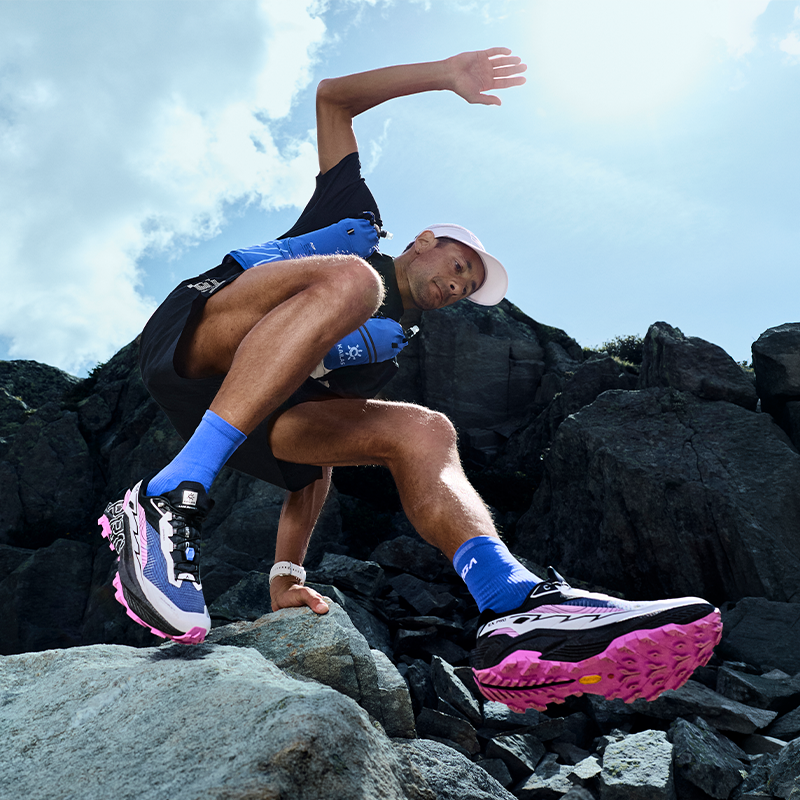
On rocky trails, shorten your steps and pick stable spots to land. Don't assume a rock is secure until your foot makes contact. Keep your arms relaxed for balance, and slow down or walk when rocks are loose, wet or hard to see.
Maintaining Control on Loose and Uneven Ground
Loose gravel, scree and chalk can shift underfoot. Take short, controlled steps, keep your knees soft and avoid sudden changes of direction. Avoid uncontrolled sliding while experienced runners may allow a slight, cushioned micro-slide on deep scree, aim to keep your feet beneath you rather than surfing the gravel. If the surface feels unstable, slow down or walk.
Managing Slippery and Wet Trail Conditions
Wet clay, roots and boggy turf can make grip less predictable. Slow down before reaching these surfaces, take shorter steps and avoid sharp turns. The right trail running shoes provide tread suited to the terrain, although grip still varies with the surface and conditions, and no footwear can prevent every slip.
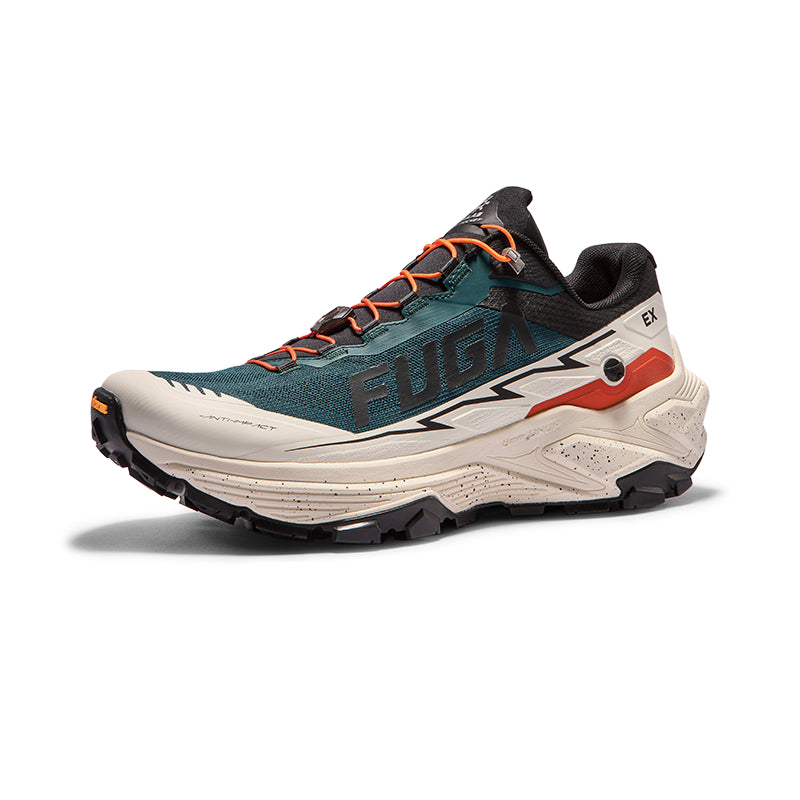
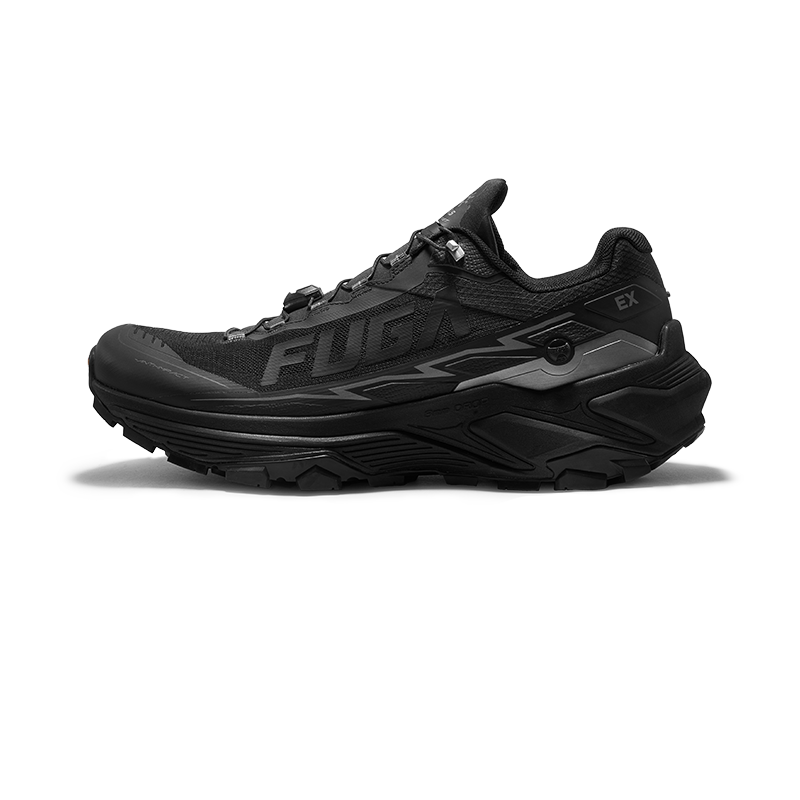
For steep descents, technical terrain, and mixed mountain outings, footwear such as the KAILAS FUGA DU Series provides the dependable traction and structured foot support needed across volatile surfaces, helping runners maintain positive foot placement and centre-of-mass control as the ground shifts underfoot.
Wet sections demand an unshakeable base. Pairing deep-lugged traction, a roomy toe-box, and locked-in lateral stability. The FUGA DU 2 is designed for technical trail use, with an outsole and upper intended to provide grip and a secure fit on uneven ground. The right choice still depends on the surface, weather and the shoe’s fit on your foot.

Adapting Your Footwork on Steep Slopes
As a slope steepens, shorten your steps and reduce your speed. Keep your knees relaxed and look for stable footing. Avoid relying on small ledges or tufts of grass, which may be loose or slippery. Walk when you cannot maintain control.
How to Train for Better Downhill Running?
Build strength gradually, and start on short, manageable descents before you move to steeper or more technical trails.
Building Leg Strength for Downhill Running
Strength work prepares your legs for downhill running, while preventing knee injuries when running on trails also depends on managing impact, maintaining control, and building strength progressively. Start with a comfortable range of motion and ramp up the difficulty gradually:
- Eccentric Goblet Squats: Lower yourself down slowly over 4 to 5 seconds before driving up briskly.
- Reverse Lunges from a Step: Stepping down backward forces the front quad and stance-leg hip stabilisers to brake under load.
- Weighted Step-Downs: Standing on a sturdy plyo box, slowly lower one heel to lightly tap the floor, keeping the supporting knee aligned over the second toe.
Improving Balance and Single-Leg Stability
Single-leg balance work pays off directly on the trail. Work single-leg Romanian deadlifts, wobble-board balances and lateral skater hops into your weekly strength sessions. Strengthening the peroneals and small intrinsic foot muscles protects your ankles from awkward rolls when you land on hidden ruts.
Practicing Downhill Running Technique
Skill work must be practiced deliberately:
-
Find a moderate grassy hill: pick a 50–80m gentle descent free of blind drops.
-
Focus on cadence reps: run down focusing only on cadence, taking as many light steps as possible in 30 seconds.
-
Gradually add technicality: as confidence grows, move to gravel or rocky singletrack, practicing smooth line adjustments without checking your momentum.
Building Confidence on Technical Descents
Build confidence on trails that match your current ability. Running with an experienced trail runner can help you learn how they assess the route, but choose a pace you can manage and do not feel pressured to follow them through difficult sections.
Common Downhill Running Mistakes to Avoid?
A few habits can make descents harder to control. Watch for these, and slow down when your footing becomes uncertain.
Looking Down Instead of Ahead
Staring directly down at your shoes blinds you to what's coming. While you should glance down to check immediate footing, keep your primary gaze 3 to 5 metres down the trail so your brain can map your line before you reach it.
Leaning Too Far Back
Tipping your shoulders behind your hips is a natural reaction to steep ground, but it turns your legs into stiff, straight props. Lean too far back and you'll start reaching forward with your feet, which makes it harder to hold a steady rhythm.
Overstriding on Downhill Sections
Reaching far ahead on each step adds braking and throws off your landing. Shorten your stride and aim for a comfortable, quiet landing.
Braking Too Hard on Steep Descents
Braking over and over with stiff, reaching steps tires your legs fast. Slow down early and switch to short, controlled steps. Work with the slope instead of fighting it. Short, rolling strides manage your momentum better than locking out your joints.
Losing Control of Your Running Pace
Letting loose completely without disciplined foot placement quickly leads to "windmilling", where the feet cannot keep up with the torso's forward velocity. Keep your pace within the range where you can scan the trail and respond to obstacles. Slow down or walk if your feet cannot keep up with the terrain.
FAQ
Is running downhill harder on your knees?
Downhill running can make your legs work harder to control your movement, especially on steep slopes or at faster speeds. How your knees feel depends on the terrain, your pace, your training history and your own body. If knee pain sticks around, cut back your running load and get advice from a qualified health professional.
Should your heels hit the ground when running downhill?
Avoid reaching far ahead and landing heavily on a locked heel. Aim for a quiet, relatively flat landing close to your centre of mass, allowing your footstrike to vary naturally with the gradient and terrain.
How fast should you run downhill on a trail?
Run only as fast as your visual scanning and technical footwork allow you to react safely to upcoming trail obstacles. Speed should be a byproduct of relaxed, fluid movement and fast cadence, never an unchecked free-fall that leaves you teetering on the edge of a wipeout.
How often should you practice downhill running?
Once or twice a week is ample for dedicated downhill technique work. Given the severe eccentric load and micro-trauma inflicted on muscle fibres, descending sessions require sensible spacing to allow adequate muscular recovery and avoid chronic patellar tendon inflammation.
Are trail running shoes important for downhill running?
Yes, dedicated trail shoes matter. Road outsoles lack the deep lugs, sticky rubber and lateral stability you need to keep from slipping on steep, muddy or rocky descents. A secure upper also keeps your toes from jamming into the front of the shoe on long downhill stretches.
Conclusion
Good downhill technique comes from controlled speed, quick footwork and gradual practice. Keep your stride short, look ahead, stay relaxed and choose a line that matches your ability. On technical or wet trails, the goal is not to run as fast as possible, but to remain balanced and in control.