







How Do You Pace Yourself When Running: Trail Race Strategy
Trail running calls for a different pacing game altogether. On the road, you can often cruise along at a steady clip and let that carry you through. On the trail, though, every climb, every descent, every shift in the surface changes the effort you're putting out. A pace that feels easy on the flat can quickly become a struggle once the ground turns steep or tricky. The trick is to pace yourself smartly, read the terrain as it comes, and resist the urge to push too hard too soon. This guide runs through how to plan your pacing before race day, tailor your strategy for the terrain you'll face, and make sensible calls on the fly so you cross the line with something left in the tank.
Why Trail Race Pacing Differs from Road Racing
Trail races are paced by effort, not just by the clock. Climbs, descents, and changing trail conditions can quickly make road-based pace targets unrealistic.
Technical terrain changes
Road surfaces tend to be more predictable, so it's easier to find your rhythm and hold it. Trails keep you on your toes – mud, rocks, roots, and steep pitches all change how each step lands and how much work you're putting in. Chase road-race speeds on technical ground, and you'll drain your tank early, turning the back end of the run into a real slog.
Environmental and mental demands
Trail races also require more focus. Constantly scanning the ground for obstacles adds mental fatigue, especially on technical sections. Weather changes, slippery surfaces, and long climbs all require you to adjust your effort and stay patient throughout the course.
Pre‑Race Planning for Optimal Pacing
Good preparation starts well before race day. Studying the course, planning your pacing, and organising your nutrition can help you deal with the challenges you will face on the trail.
Analyse the course profile
Before race day, look beyond the total distance. The elevation profile tells you where to hold back and where you can open up. A 30km trail race with serious climbing is a world away from a flat route. Pinpoint where the hardest climbs hit, and you can pace yourself accordingly, keeping something in your legs for the closing stages.
Set objectives and pacing plan
Break the course into sections based on terrain or checkpoints rather than fixed mile splits. centrstabilize Keep your effort controlled early on so you have enough energy to push in the final stages. Building a stronger aerobic base through consistent running endurance training will also help you maintain that controlled effort for longer without fading late in the race.
Develop hydration and nutrition strategy
Plan your fueling around the terrain. Steep and technical sections can make eating harder, so take gels, snacks, and fluids on flatter sections when your body can handle them better. This helps maintain energy and avoid stomach issues during the race.

Pacing Strategies by Terrain
The way you run should change with the trail beneath you. Shorter steps on technical ground, controlled effort on climbs, and efficient descents all help you manage energy over longer distances.
Flat Sections: Maintain a Steady Rhythm
When you hit a smooth stretch of singletrack or an old railway line, it's tempting to open up and let rip. Don't. Settle into a comfortable, rhythmic cruise that keeps your breathing in check. Use that stretch to reset your posture, give your arms a shake, and take a drink. Bank the miles without pushing your heart rate into the red.
Uphill Sections: Use Run-Walk or Power Hiking
It's surprisingly common to see runners charging the first big climb, only to walk the next three. A controlled power hike often gets you to the top with fresher legs and without losing much time. Get comfortable with the power hike. Lean in, plant your hands on your thighs, and push through your glutes with each purposeful step. A solid hike is often no slower than a laboured jog, but it uses a fraction of your energy. Save your legs, and you'll be ready to roll the moment the ground flattens out.
Downhill Sections: Control Speed and Reduce Impact
The biggest mistake people make on descents is trying to brake with every foot strike. Land too far out in front, and you're effectively putting the brakes on, hammering your quads with every step. Keep your feet light and quick, using a controlled running cadence that allows you to stay centred over your stride. Look a few metres ahead so you have enough time to read the ground and react.
Technical Terrain: Slow Down and Stabilize Your Steps
On technical ground, set speed aside and put your focus into staying steady. Shorten up your stride, keep your weight centred, and pick your line carefully – that'll cut your chances of slipping or tweaking an ankle.
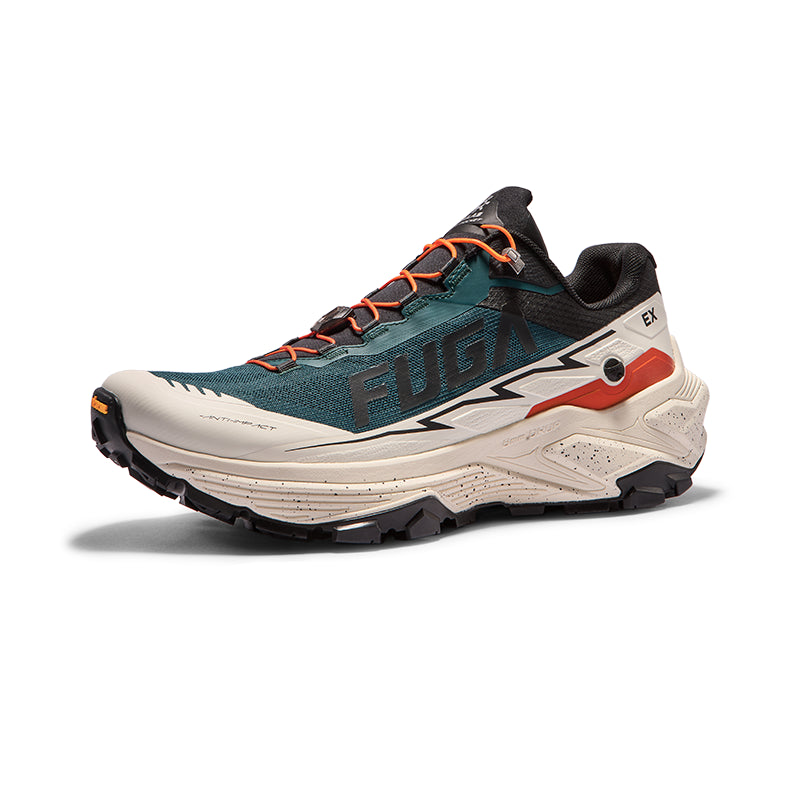
When you're dealing with wet rock, mud, or long, grinding descents, good grip and solid support count for everything. The KAILAS FUGA EX 3 and EX 330 run a Vibram Megagrip outsole that digs in on slick surfaces. For the longer stuff, the EX 330 brings extra cushioning through the midsole, plus reinforced toe and heel protection to keep you comfortable over the miles.
|
Terrain Type |
Pacing Technique |
Primary Effort / Focus |
|
Flats & Smooth Singletrack |
Steady, rhythmic cruising |
Aerobic efficiency, hydration reset |
|
Steep Inclines |
Power hiking / Run-walk transitions |
Heart rate management, muscle preservation |
|
Technical & Muddy Blocks |
Short, nimble steps; slow down |
Maximising outsole grip , stability, injury prevention |
|
Long Downhills |
High cadence, soft landings |
Quad protection, balance, controlled speed |
Dynamic In-Race Adjustments
Even the best-laid plans tend to come unstuck on the trails. You've got to stay adaptable and adjust your effort to how you're feeling and how the course is playing out on the day.
Use RPE, Breathing, and Heart Rate to Control Effort
GPS data can be wildly off on rough terrain, so your best bet is to go by feel. Keep an eye on your breathing – for most of the race, you should be able to get out a few broken words at a time. If you're gasping on a small climb, you're chewing through your reserves too fast. Back it off until your breath settles.
Adjust Pace When Fatigue or Cramps Appear
If cramps or heavy fatigue appear, reduce your effort instead of trying to maintain the same pace. Slow down, walk if needed, and take in fluids and electrolytes. Once your body feels better, gradually return to your planned effort.
Modify Nutrition and Hydration Before Energy Drops
If you wait until you're properly starving or gasping for a drink, you've left it way too late. If you catch your focus starting to drift or your mood dipping – sure signs you're heading for a crash – get a gel or an electrolyte drink down you straight away. Get some fuel in fifteen minutes before a big climb, and it'll be there in your system when you really need it.

Post-Race Review and Training Adjustments
After each race, set aside a bit of time to go over what clicked and what didn't. Your pacing, your fueling, and the data you gathered all feed into making smarter calls next time out on the trails.
Review Pacing, Energy, and Nutrition
Once you've eaten and rested, sit down and take a proper look at how the race actually went. Go through your segment times – did you tear through the first quarter and then haemorrhage time in the last 10k? Did your energy hold steady or did you hit a wall somewhere in the middle? Figure out where you stuck to the plan and where things started to slip.
Identify Weak Points for Future Trail Races
Use what happened in the race to shape your next block of training. If your lungs felt great but your quads were shot by 30k, add more downhill reps and dedicated eccentric work. Foot discomfort also deserves attention: recurring hotspots or blisters may mean you need to reassess your shoe fit and test different moisture-wicking men's running socks during longer training runs. Keep chipping away at these weak points, and your pacing will become smoother and more reliable with every race.
FAQs
How can I use heart rate to pace a trail run?
Forget pace, run to heart rate instead. Keep things in Zone 2 for the most part, maybe brush the bottom of Zone 3 now and then. That keeps you ticking over aerobically, so you don't end up pushing too hard on some gentle slope that doesn't look like much, only to find your legs have gone when the race really starts biting.
How can I conserve energy on technical terrain?
Shorten up, speed your feet up, and stay loose in your upper body. Jumping over every rock and root is a fast way to blow your energy. Just pick your way over them, let your shoes do the work, and keep moving without wrestling the trail.
What is the best hydration and nutrition strategy for long trail races?
Get in small, regular amounts of carbs and fluid from the off, ideally every 20 to 30 minutes. Aim for about 60–90 grams of carbs an hour, using a mix of gels and drink mixes. And time any solid food for the flatter, easier stretches, where your stomach can handle it more comfortably.
How can I simulate race pacing during training?
Practice run-walk transitions and put in back-to-back long weekend runs on trails that look like your target race. Power hike the steep climbs and get straight back into running on the flat. That builds the muscle memory and the mental edge you'll need on race day.
How should I refine pacing strategy for future races?
Compare your actual race splits against your original plan and pin down where you overdid it. Use that real data to adjust your effort zones, tweak your feeding schedule, and shape your strength work for the next block of training.
Conclusion
Pacing a trail race is about reading the ground, knowing when to push and when to back off. Take the climbs steady, don't fight the technical stuff, and you'll have something in the tank for the finish. Before race day, get to know the route, sort your kit, and treat every run as a lesson. Do that often enough, and you'll start to trust your feel for effort and that's what gets you through when the trail throws its worst at you.