









How to Breathe While Running: Techniques for Steady Trail Effort
A trail can change from smooth ground to a steep climb or rocky descent in a few steps. Your breathing has to adjust with it. The right rhythm won’t make a hard section easy, but it can help you notice when you’re pushing too hard and settle into an effort you can sustain. This guide covers breathing basics, pacing across different intensities, and ways to practice on short trail runs.
Why Does Breathing Get Harder When Running?
When you run harder, your muscles need more oxygen and produce more carbon dioxide. On a trail, climbs, uneven footing and sudden changes in pace can raise that demand quickly. Understanding what’s behind the heavier breathing can help you tell normal effort from a sign to slow down.
Oxygen Demand and Breathing Rate During Running
Muscle work runs on cellular fuel. As you pick up your stride and push harder, working muscles burn through ATP fast, which drives up oxygen demand. Your heart beats faster and your breathing picks up to move fresh oxygen into the bloodstream and clear out the CO2 building up. That heavy-breathing feeling comes mainly from sensors picking up rising blood acidity and CO2 levels—not simply from a lack of oxygen in the air.
Common Causes of Heavy Breathing While Running
Gasping for air rarely comes down to just one thing. A sudden surge in effort can push you past your current aerobic threshold before your circulatory system catches up. Beyond baseline fitness, poor posture, hunched shoulders, a collapsed chest, limits how far your diaphragm can move, forcing you into shallow, inefficient chest breathing. Dry air, seasonal allergies, mild dehydration, and heat can also tighten your airways and spike your heart rate early.
The Impact of Pace and Terrain on Breathing
Pavement gives you a uniform surface where you can lock into a steady cadence, but dirt trails constantly break your rhythm. Stepping over exposed roots, climbing punchy switchbacks, and staying stable across loose scree all demand sharp bursts of anaerobic power. Every sudden incline or unstable foot placement spikes muscular demand and can instantly turn steady breathing into desperate panting unless you proactively dial back your effort.

How to Breathe While Running Efficiently
There’s no single breathing pattern that works for every runner or every pace. A relaxed posture, deeper breaths and a rhythm that changes with your effort can make breathing feel more manageable. These techniques are starting points; adjust them if they feel forced.
Diaphragmatic Breathing for Runners
Shallow breathing leans hard on your neck, traps, and upper chest, which tires out your upper body fast and limits how much your lungs can expand. Belly breathing or diaphragmatic breathing, pulls the diaphragm down toward your abdominal cavity, creating a negative-pressure vacuum that draws air deep into the lower lobes of the lungs, where capillary density is highest. To practice it, lie on your back with one hand on your chest and the other on your belly. Inhale slowly: your stomach should rise noticeably while your chest stays quiet. Then carry the habit into an upright posture, keep your spine tall and shoulders relaxed so your lungs have room to expand in all directions.
Nose Breathing vs. Mouth Breathing
The nasal-versus-mouth breathing debate usually misses one key thing: how hard you're actually running.
- Nasal breathing: Best for easy warm-ups, recovery jogs, and conversational efforts. Your nasal passages filter, humidify, and warm incoming air while nudging you into smooth parasympathetic regulation.
- Mouth breathing: Once your pace climbs into tempo or threshold zones, those narrow nasal passages just can't move enough air fast enough. Breathing through an open mouth or inhaling through nose and mouth at once, drops airway resistance dramatically and delivers max ventilation when metabolic demand peaks.
Rhythmic Breathing and Footstrike Coordination
Pairing your breath to your stride keeps you from panting erratically and takes mechanical stress off your core. Plenty of runners naturally settle into an even 2:2 pattern, inhale for two footstrikes, exhale for two. But if you always exhale on the same foot, the biggest ground-impact forces keep landing on that same side when your core is least supported. Switching to an odd-numbered cadence, like a 3:2 rhythm—inhale for three strides, exhale for two—alternates your exhale footstrike between left and right. That spreads torsional stress evenly across your hips, pelvis, and lower back.
Finding a Natural Breathing Rhythm for Your Pace
Your respiratory rate should mirror your output rather than remain locked in a single setting. The table below outlines how to dial in cadence-linked breathing across standard training zones:
|
Intensity Zone |
Effort Level |
Recommended Breath Cadence |
Primary Breathing Mode |
|
Easy / Recovery |
Conversational, Zone 2 |
3:3 or 3:2 pattern |
Nose or combined nose/mouth |
|
Moderate / Tempo |
Comfortably hard, Zone 3 |
2:2 pattern |
Mouth with relaxed jaw |
|
Hard / Hill Repeats |
Near VO2 max, Zone 4–5 |
2:1 or 1:1 pattern |
Full oral ventilation |
How to Control Your Breathing at Different Running Intensities
A pace that feels comfortable on flat ground may become strenuous on a climb. Use your breathing as a practical cue: if you can no longer speak comfortably on an easy run, or you’re gasping during a hard effort, ease back or change your rhythm.
Maintaining Steady Breathing During Easy Runs
Zone 2 foundation runs demand strict discipline. Use your ability to speak comfortably as a simple way to measure exercise intensity, easing off if you need to pause for breath after only a few words. If you notice your breathing turning ragged or your shoulders inching up toward your ears, your aerobic engine is drifting into a harder zone. Ease off the pace, unclench your fists, drop your shoulders, and draw long, three-count breaths deep into your lower ribs.
Adjusting Your Breathing During High-Intensity Efforts
During structured speedwork or tempo efforts on packed fire roads, your breathing will naturally turn rapid and audible. The goal is to avoid panic panting. Switch to an active 2:2 cadence, focusing intentionally on a forceful, complete exhalation. Emptying your lungs fully clears stagnant CO2, creating space for fresh, oxygenated air on the subsequent intake.
Controlling Your Breathing on Uphill and Downhill Trails
Climbing instantly spikes your heart rate. Instead of fighting the gradient with wide strides, shorten your stride length, increase your cadence, and match a quick 2:2 or 2:1 breath to your rapid steps. Leaning slightly from the ankles rather than hinging sharply at the waist keeps your airway open. When you crest the climb and descend, gravity pulls your body forward, tempting you to hold your breath as you brake. Keep your breath flowing steadily on downhills to absorb kinetic impact and prevent sudden abdominal cramping.
Recovering Your Breathing After a Sprint
When crossing the crest of a steep climb or finishing a fast segment, resting your hands on your knees with a forward hinge can actually optimize your diaphragm's range of motion and speed up heart rate recovery. Alternatively, you can stand tall with hands on your hips to expand your ribcage. Whichever posture you choose, focus on extended exhalations.

How to Improve Breathing Control and Running Endurance
Breathing usually gets easier as your aerobic fitness improves. Consistent easy runs, planned faster efforts and attention to pacing can help you handle changes in intensity without starting every run at a pace you can’t maintain.
Build Aerobic Endurance Through Consistent Training
Aerobic fitness is the foundation of calm breathing. Long, slow distance (LSD) runs expand capillary beds around your muscle fibers and increase mitochondrial density, improving your running economy and allowing your muscles to utilize oxygen far more efficiently at any given pace. Over weeks of consistent base building, the exact pace that once left you breathless will begin to feel remarkably easy and conversational.
Practice Breathing Control During Running
Treat your breath as a dedicated training metric during selected workouts. Designate a 15-minute block during mid-week runs to monitor your cadence synchronization. Focus entirely on feeling your belly expand outward rather than watching your watch metrics. If you lose the rhythm when hitting a small rise, immediately adjust your cadence back into the odd-pattern cycle until it becomes second nature.
Use Interval Training to Adapt to Changes in Intensity
Intervals condition your nervous and respiratory systems to handle oxygen debt without panic. Workouts like 6 to 8 sets of 3-minute hill repeats (or fartleks) force your respiratory system to ramp up quickly under stress and then stabilize during short recovery windows.
Maintain a Sustainable Pace to Reduce Early Fatigue
Starting too fast is the quickest way to blow up your breathing. To pace yourself when running on singletrack trails, use perceived exertion rather than trying to match your road pace. Check your breath every mile: if you cannot manage a steady 3:2 or relaxed 2:2 cadence on flat sections, throttle back early to preserve your energy reserves for the back half of the route.
How to Apply Breathing Techniques to Short Trail Runs
Short trail runs can still include steep climbs, technical footing and quick changes in effort. Rather than trying to hold one pace or breathing pattern throughout, look ahead, adjust early and keep your movement relaxed as the terrain changes.
Adjust Your Breathing to Changing Trail Conditions
Trail conditions shift within seconds. A smooth pine-needle path can abruptly transition into an exposed root garden or muddy creek crossing. Anticipate these shifts visually. Look 10 to 15 feet ahead down the trail so you can smoothly downshift your breathing pattern before your foot strikes an obstacle, avoiding sudden gasps caused by surprise balance corrections.
Manage Your Effort on Technical Trails
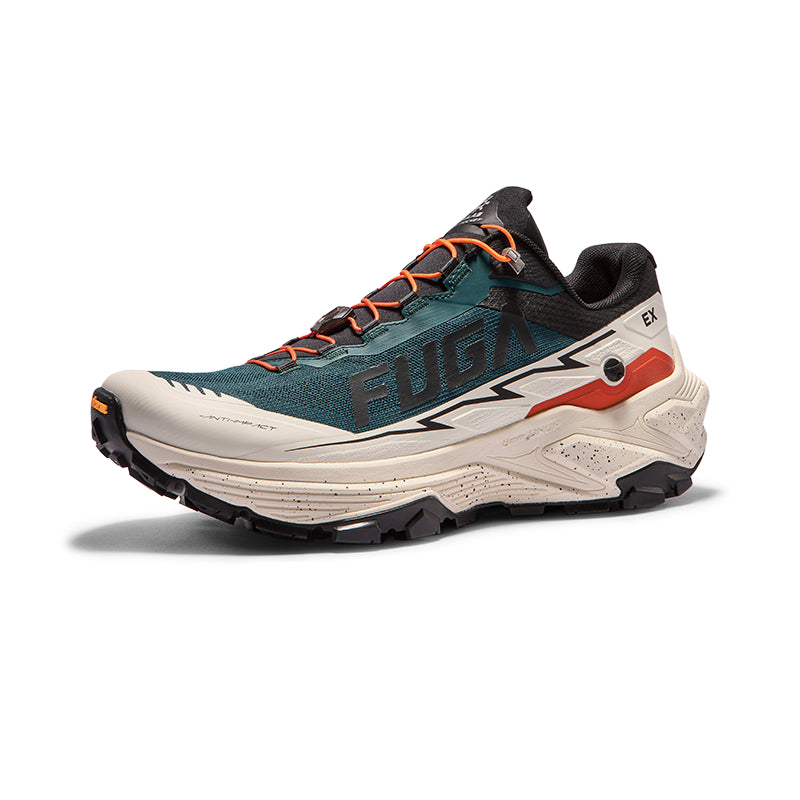
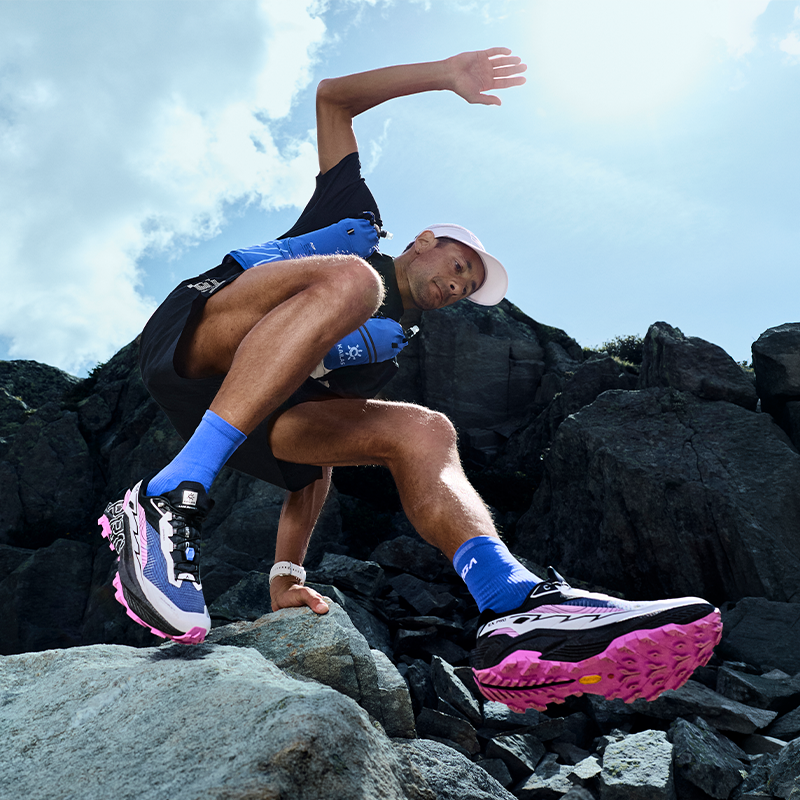
Scrambling across boulder fields, loose gravel, and damp granite shelves challenges lower-body stability, demanding calm, rhythmic breathing while maintaining secure footing. Choosing trail running shoes for rocky terrain with a secure fit helps limit movement inside the shoe as you cross uneven ground.
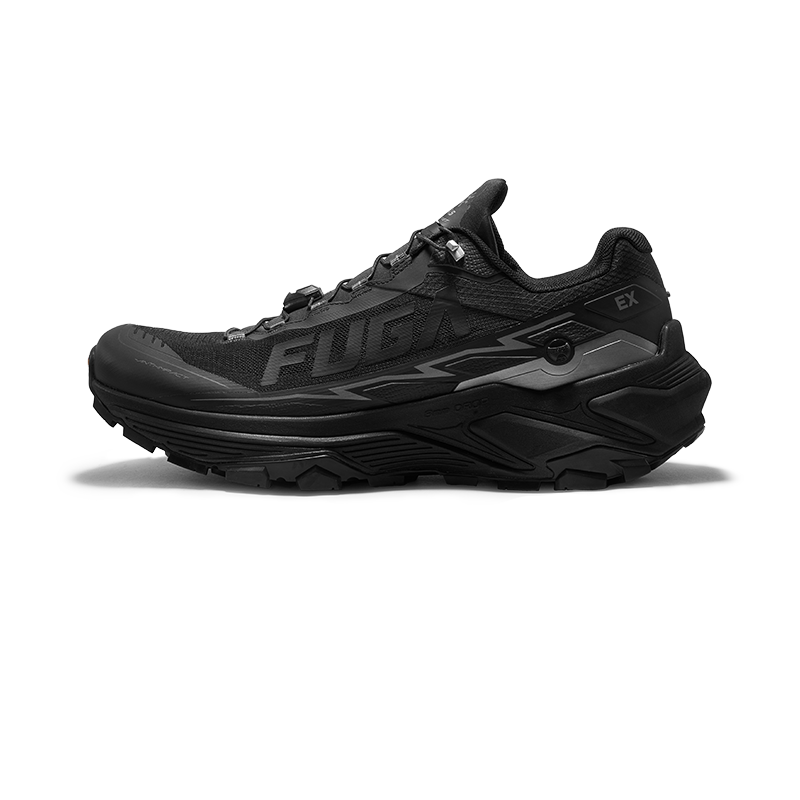
The KAILAS FUGA EX 3 BOA helps eliminate this distraction with its BOA® Fit System, letting you micro-adjust upper tension to match changing foot volume over long descents. Paired with a grippy Vibram Megagrip outsole, the shoe provides reliable traction on slick rock and technical cambers. With dependable grip and a locked-in fit, you spend less physical energy fighting trail slip and can dedicate your full focus to maintaining a calm, cadence-aligned breathing rhythm.
Maintain a Steady Rhythm on Climbs and Descents
Short, punchy trail loops often throw steep, rolling hills at you that break up your road cadence. On climbs steeper than 12%, settle into a rhythmic power-hike: plant each step firmly, drive off your thighs, and hold an even 2:2 breath. When practicing downhill running technique, keep your knees soft, take short, controlled steps, and maintain a relaxed breathing rhythm.
Prepare for Changing Trail Conditions and Running Demands
Staying hydrated and carrying fuel smoothly keeps your breathing from being derailed by unnecessary stops. Choose running packs and belts that sit securely without pressing against your ribs, so you can move comfortably and maintain a relaxed breathing rhythm.
For mountain outings requiring sustained hydration and layered apparel, the KAILAS FUGA WING 8 utilizes an ADF dial adjustment system alongside a BI-FIX flask retention mechanism, keeping your water flasks firmly anchored against your torso without bounce.

Runners aiming for fast-and-light short loops or warm weather trail tempos can turn to the KAILAS FUGA VITA. Weighing just around 2.3 oz, its wrap-around anatomical fit and partitioned compartments keep soft flasks and gels securely positioned on your lumbar spine. Dialing in the right storage system eliminates gear jostling, letting you focus entirely on your pace, path, and breath.

FAQ
Why Do Runners Breathe Heavily After a Sprint Race?
Runners breathe hard after a sprint because the body is paying back an "oxygen debt" through excess post-exercise oxygen consumption (EPOC). Sprints lean heavily on anaerobic glycolysis, which burns through ATP and phosphocreatine fast and piles up metabolic byproducts. That deep breathing afterward recharges your energy reserves and brings resting blood chemistry back to normal.
How Can You Prevent Side Stitches While Running?
Prevent side stitches by switching to a rhythmic odd-pattern breath, so you don't keep exhaling on the same footstrike. Also, give yourself at least two hours between a big meal and a run, warm up gradually, and take deep belly breaths instead of shallow chest puffs.
How Should You Breathe When Running in Cold Weather?
Breathe through a light neck gaiter or buff when running in freezing temps to warm and humidify the air before it hits your bronchial tubes. On easy stretches, inhaling through your nose also conditions frigid winter air, which helps head off airway spasms and cold-induced coughing.
Can Poor Breathing Technique Cause Fatigue During a Run?
Yes, inefficient breathing wears out the accessory muscles in your neck, shoulders, and chest early. Shallow breathing increases dead-space ventilation and causes carbon dioxide to build up, triggering acute respiratory distress and signaling your brain to slow your pace down, even if your blood oxygen remains stable.
When Should Shortness of Breath During Running Be a Concern?
Get medical attention if shortness of breath comes with chest pressure, radiating arm or neck pain, lightheadedness, or sudden wheezing that doesn't ease after you slow to a stop. These symptoms can point to underlying cardiovascular or pulmonary issues rather than normal exercise-induced fatigue.
Conclusion
Your breathing will shift with your pace and the trail underfoot. Stay relaxed on the easy stretches, shorten your stride on climbs, and let your breathing settle as you recover. With regular practice, these cues can help you pace yourself more evenly on short, technical routes. Consistent training and well-fitting trail gear also make it easier to keep your focus on the path ahead.