









How to Run Uphill: Trail Running Techniques and When to Use Power Hiking
Ask a trail runner about a long climb and they’ll likely mention the same challenge: maintaining a consistent effort when the trail gets steep, rocky or both. Running uphill well isn’t about charging at the slope. It’s about using efficient form, pacing yourself and knowing when a brisk hike will get you uphill with less effort. Here’s how to climb smoothly, know when to switch to power hiking and train for both.
Why Is Uphill Running Challenging on Trails?
Trail climbs ask more of you than a paved hill. The grade can change without warning, the footing is uneven, and your muscles and cardiovascular system work harder as the elevation adds up.
Steep Grades Increase Muscular and Cardiovascular Demands
On a climb, every step lifts your body against gravity, so your calves, glutes and quads do more work. Your heart rate climbs too, because those muscles need more oxygen. On a steep grade, even an easy jog can turn into a hard effort fast.
Uneven Surfaces Make Uphill Running More Difficult
Roots, loose stones, mud and slick rock make it harder for you to keep your footing. Your ankles and stabilizing muscles work nonstop, and a slip can disrupt your rhythm. Match your pace to the surface, and you stay in control instead of burning energy.
Long Climbs Require Patience
A short hill may be over before fatigue sets in, but a sustained climb can wear you down if you start too fast. Settle into a pace you can hold, keep your breathing steady and save some energy for the ridge and the descent.

How to Run Uphill Efficiently on Trails
Good uphill form is less about forcing your way up and more about keeping your movement smooth. A few small changes to posture, stride and effort can make a climb feel more manageable.
Lean Forward Slightly
Keep your body in a straight line from your ankles through your hips to your head. Lean gently from the ankles instead of folding at the waist, which keeps your chest open so you can breathe easier. Look ahead on the trail so you can spot obstacles and pick your next steps.
Shorten Your Stride and Keep a Steady Cadence
Long, bounding strides will tire your legs out fast. Take shorter steps instead, and keep a light, steady turnover. The right cadence shifts with the grade and the terrain, so stay relaxed and keep moving without a pause between steps.
Use Your Arms for Balance and Drive
A compact arm swing helps you keep rhythm and balance on a climb. Drive your elbows back, keep your shoulders relaxed and avoid swinging your hands across your body, which twists your torso.
Adjust Your Foot Placement to the Surface
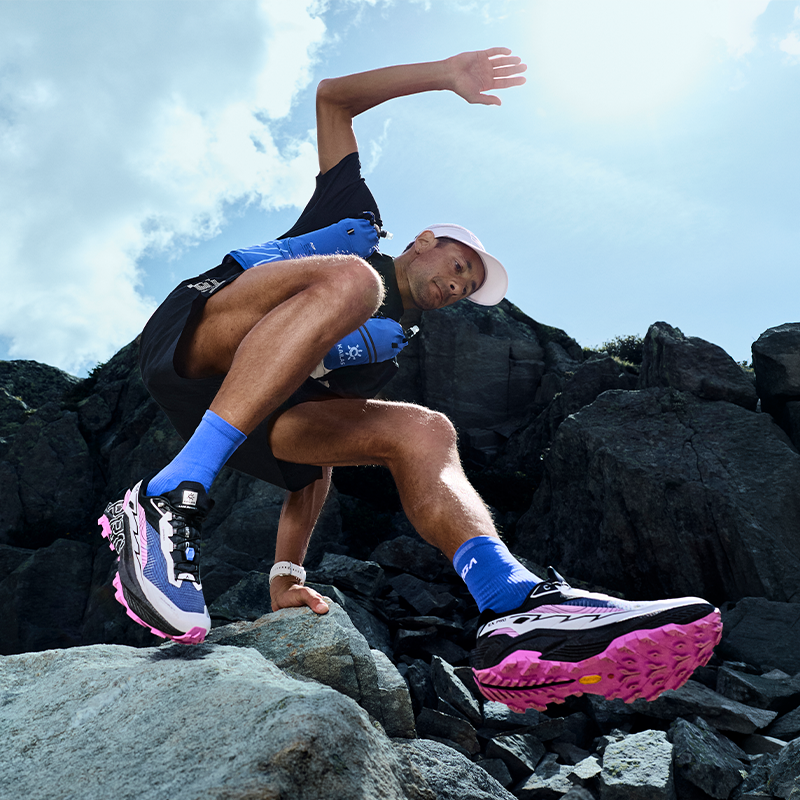
On smooth, packed dirt, a light midfoot or forefoot landing may feel natural. On steep or rocky sections, just aim for secure, stable contact instead of forcing a particular footstrike. Step on solid patches of ground where you can, especially once your calves start tiring.
Choose Trail Shoes with Reliable Grip and Stability
Even good form is hard to maintain when your shoes keep slipping. For technical climbs, grip, a stable platform and a secure fit can help you move with more confidence:
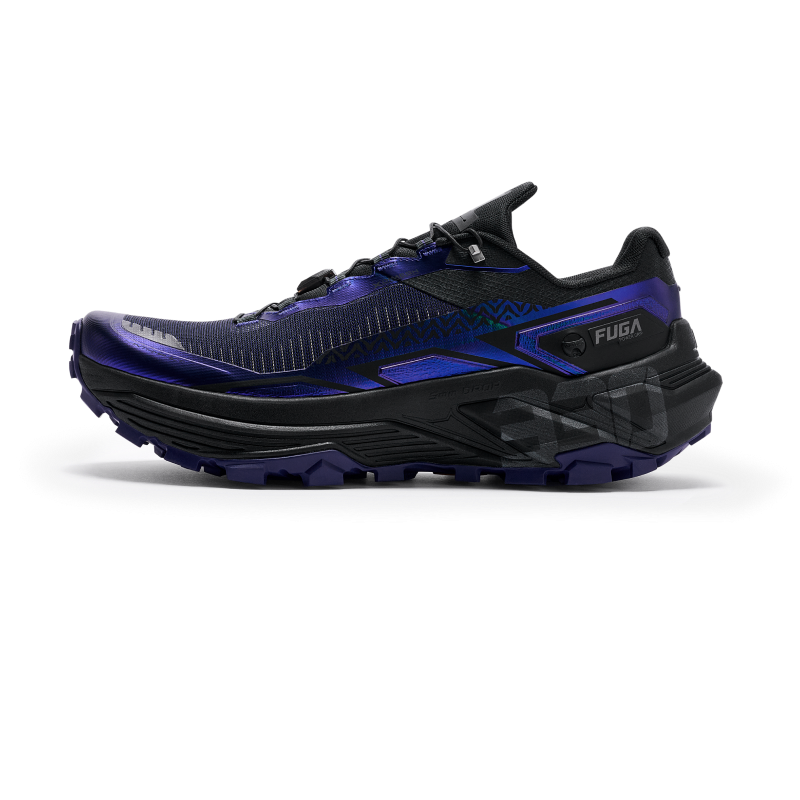
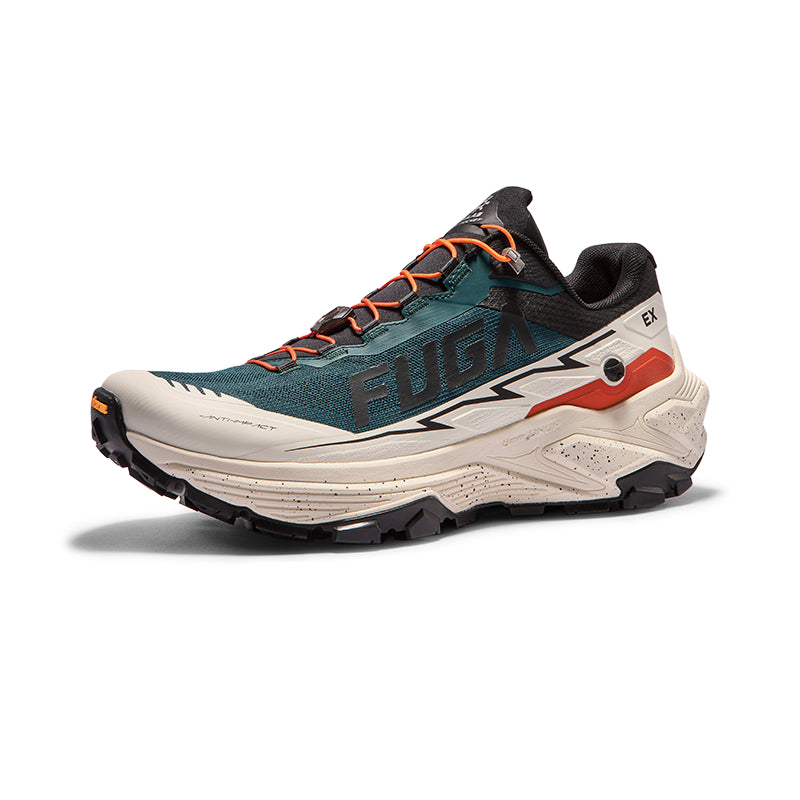
- Technical climbs and mixed terrain: The KAILAS FUGA DU 2 combines a 4.9-inch (125mm) forefoot platform with a Vibram MEGAGRIP outsole and Vibram LITEBASE technology for lightweight traction. According to brand lab testing, its supercritical foam forefoot delivers 27% higher energy return compared to standard EVA midsoles.
- Loose gravel and steep grassy slopes: The KAILAS FUGA DU MONSTER has dual-zone 0.20-inch / 0.28-inch (5mm / 7mm ) lugs and a TPU heel exoskeleton for grip and support on loose, uneven ground.
- Wet or muddy trails: The KAILAS FUGA DU 2 GTX pairs a waterproof, breathable GORE-TEX bootie with a Vibram MEGAGRIP outsole. Its dual-density supercritical foam midsole adds responsive cushioning for longer outings.
| Shoe model | Best trail conditions | Uphill feature |
|---|---|---|
| KAILAS FUGA DU 2 | Steep grades and mixed terrain | 4.9-inch forefoot platform and responsive foam |
| KAILAS FUGA DU MONSTER | Loose gravel, scree and steep grass | 0.20-inch / 0.28-inch dual-zone lugs and TPU heel support |
| KAILAS FUGA DU 2 GTX | Rain, wet rock and mud | Waterproof GORE-TEX bootie and cushioned midsole |
Keep Your Effort Sustainable
Pacing yourself by effort and breathing is more useful on a climb than relying on speed alone. On a moderate grade, aim for a pace at which you can still speak in short phrases. If you’re gasping early, ease off; a small adjustment now can help you run again when the trail levels out.
When Should You Switch to Power Hiking?
Power hiking is a useful trail skill, especially on steep or technical climbs. A brisk hike can conserve energy and keep you moving efficiently when running becomes a slow shuffle.

Notice When Running Stops Feeling Efficient
There’s no single grade where everyone should switch; research on uphill walk–run transitions shows that the preferred change of gait can align closely with energetic cost at a controlled ascent rate. On steep slopes, steps, loose scree or slick mud, running can become awkward and costly. If your stride turns choppy, your calves tighten or your breathing gets ragged, try a brisk hike and see if your effort settles.
| Factor | Keep running | Switch to power hiking |
|---|---|---|
| Trail gradient | Gentle or moderate grades | Steep pitches or step-like terrain |
| Footing | Smooth dirt or predictable gravel | Loose scree, boulders or slick mud |
| Breathing and effort | Controlled and rhythmic | Hard to maintain without gasping |
| Climb length | Short rollers or a brief push | Long, sustained ascents |
Keep a Brisk, Compact Rhythm
Power hiking should feel purposeful, not like a casual walk. Lean slightly forward from the ankles, keep your steps short and rhythmic, and use your arms to help maintain momentum. Avoid reaching far ahead with your lead foot; shorter steps can make the climb feel smoother and reduce the effort of hauling yourself up each step.
Use Your Hands or Poles on Steep Ground
On very steep sections, pressing your hands against your thighs just above the knees can help you push upward. Trekking poles offer another point of support: plant them beside you in rhythm with your steps to help steady your movement and take some load off your legs.
Shift Between Running and Hiking as the Trail Changes
You don’t need to choose one pace for the entire climb. Hike the steep, rocky sections, then ease back into a jog when the grade softens or the surface becomes smoother. Practicing these transitions helps them feel natural when you’re tired.
How to Train for Uphill Running and Power Hiking
A trail running training plan builds climbing strength through aerobic work, leg strength and deliberate hill practice. Train both your running and hiking so you’re ready to adjust your effort on the trail.
Build Climbing Endurance with Hill Repeats
Find a steady hill that takes two to four minutes to climb. Run up at a controlled, comfortably hard effort, focusing on short steps and a strong arm swing, then jog back down to recover. Start with four repeats and build toward eight as your fitness improves.
Strengthen Your Legs
Single-leg stability and strength help on steep, uneven ground. Two short strength sessions a week can include:
- Bulgarian split squats for single-leg quad and glute strength.
- Weighted step-ups to practice driving upward.
- Single-leg calf raises to build calf and ankle strength.
- Glute bridges or Romanian deadlifts to strengthen your glutes and hamstrings.
Practice Power Hiking on Sustained Climbs
Just like running technique, power hiking should be practised before race day. Include sustained uphill hiking in your training so you can maintain an efficient rhythm when fatigue sets in. Dedicate parts of your weekend long runs to sustained, brisk hiking up the steepest local trails you can find. Focus on fast turnover, purposeful arm swing, and rhythmic breathing so fast hiking feels natural when fatigue sets in late in a run.
Combine Running and Hiking in One Session
Simulate real mountain racing by alternating between running and hiking on a long climb. For example, run for 3 minutes on moderate grades, switch to 2 minutes of brisk power hiking on steeper sections, and repeat all the way to the summit. Training your legs to switch smoothly between both movement patterns eliminates that heavy, awkward feeling when transitioning mid-race.
Common Uphill Running Mistakes to Avoid
A few common habits can make trail climbs harder than they need to be. Pay attention to your effort and footing, and adjust before you’re worn out.
Starting Too Fast and Wasting Energy Early
Charging hard into the base of a climb feels heroic for the first 60 seconds and miserable for the next 20 minutes. Starting too hard can push you above your sustainable effort early in the climb. This can accelerate fatigue and make it harder to maintain a steady pace over the remaining ascent. Ease into the bottom of every hill slightly slower than you think you should, then gradually build effort once you settle into a rhythm.
Taking Strides That Are Too Long on Steep Climbs
Overstriding uphill is one of the fastest ways to cook your quads and calves. Reaching your foot too far out in front of your hips forces you to pull your body weight up over a steep lever with every step. Keep your feet landing right underneath your center of mass and let quick turnover do the work.
Ignoring Changes in Gradient and Trail Conditions
Trying to hold one stubborn pace regardless of whether the trail is 6% smooth dirt or 22% loose scree is a recipe for burnout. Stay attentive to subtle shifts in pitch and footing, adjusting your stride length, cadence, and gear as the mountain dictates.
Conclusion
Trail climbs get easier when you work with the terrain. Keep your stride compact, stay relaxed through your upper body and choose secure footing. When running turns into a tiring shuffle, power hike; when the trail opens up again, jog. Practice both on your local hills, and you’ll be better prepared for long climbs and the miles that follow.
FAQ
How Steep Is Too Steep to Run Uphill?
There is no universal cutoff for switching to power hiking because speed, footing, climb length and fitness all affect the choice. However, rough footing and climb length matter just as much as steepness. If your breathing gets ragged or your stride turns into a choppy shuffle, switch to a hike.
How Does Elevation Gain Affect Uphill Running Performance?
More climbing means more work for your legs and a bigger overall effort than covering the same distance on flat ground. As fatigue sets in, slow down when you need to, drink regularly and keep fueling on longer outings.
Does Power Hiking Count as Trail Running?
Yes. Power hiking is a normal part of trail running and ultras. Runners hike steep sections all the time to manage effort and keep moving efficiently through a race.
Is Power Hiking More Energy-Efficient Than Running Uphill?
It can be, especially when the grade is steep enough that running turns into a slow, bouncy shuffle. Hiking takes out the running flight phase and can help keep your effort steadier, though the most efficient choice comes down to your fitness, pace and the terrain.
Does Uphill Running Put More Stress on Your Knees?
Uphill running generally involves less impact loading than downhill running, but it still places demands on the quadriceps, calves, knees and Achilles tendons. Increase your climbing volume gradually and build the strength needed to handle sustained ascents.
How Much Cushioning Do You Need in Trail Running Shoes for Uphill Running?
Look for cushioning that feels protective without making the shoe unstable. On rocky climbs, trail running shoes with a responsive forefoot, secure fit and dependable lugs help balance comfort with traction and control.