







Gran Trail Peñalara: Spain’s Classic Ultra Trail Through Sierra de Guadarrama
The Gran Trail Peñalara (GTP) is a mountain ultramarathon held in Spain’s Sierra de Guadarrama, about an hour northwest of Madrid. Its routes combine long climbs, rocky ridgelines and technical descents, with terrain and weather that can change over the course of a race. The event is presented as the Fuga Gran Trail Peñalara, with KAILAS FUGA as its title sponsor. This guide covers the race distances, course conditions, equipment and training to consider when preparing for the event.
Gran Trail Peñalara at a Glance
The race is centred on Navacerrada, with other starts and course sections depending on the distance. Here are the event’s location, typical schedule and main race options.
Race Location in the Sierra de Guadarrama
The race takes place within the Sierra de Guadarrama National Park, a protected alpine playground straddling the provinces of Madrid and Segovia. The historic mountain village of Navacerrada acts as the beating heart of the event, hosting the start and finish lines alongside race headquarters.
Race Dates and Registration
GTP is typically held in early October, treating runners to crisp autumn air, sweeping mountain foliage, and unpredictable alpine weather. (For reference, the 2026 edition took place October 9–11, with future editions following a similar early-October schedule). Registration and pre-registration lotteries generally open between December and January, filling up quickly due to strict national park environmental quotas.
Main Race Distances and Routes
The event features multiple distances catering to seasoned ultra runners and sub-ultra trail specialists:
- GTP (~104 km / ~5,100 m+): The premier looped circuit connecting the prominent massifs and summits across the range.
- TP60 (~60 km / ~2,700 m+): A point-to-point brute starting in Miraflores de la Sierra and finishing in Navacerrada.
- Cross Nocturno (~11 km): A fast-paced Friday night warm-up under the stars.
What Makes the Race a Mountain Ultra Challenge?
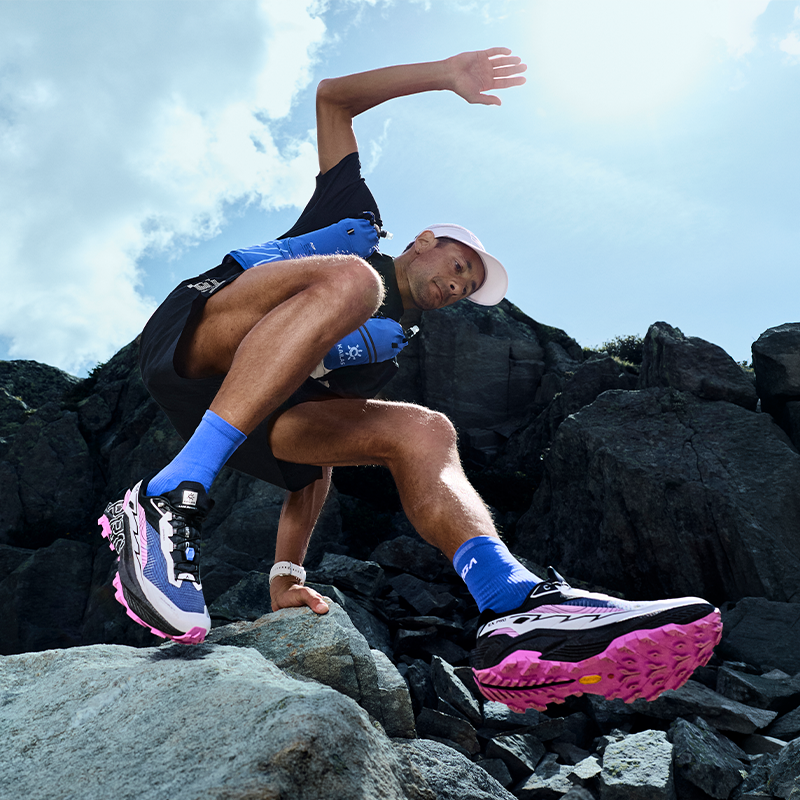
Beyond the raw distance, GTP earns its fearsome reputation through exposure, rocky footing, and high elevation. The course takes runners high into the alpine zone along the Peñalara massif, reaching elevations well over 2,200 meters. You will spend hours above the tree line on exposed granite crests where gusting winds, thin air, and steep camber demand absolute concentration.
What Is the Sierra de Guadarrama Terrain Like?
The course crosses several types of mountain terrain, from forest paths at lower elevations to rocky trails and exposed ridgelines higher up. These changing surfaces affect footing, pace and the demands of each climb and descent.
Mountain Trails Through the Sierra de Guadarrama
The route traverses high-altitude paths that carve along glacial cirques, mountain passes (puertos), and ridgelines. These trails are unmanicured and rocky, with granite slabs, loose shale, and root steps dictating your cadence.
Forest Paths and Mixed Mountain Terrain
Lower sections plunge into lush Scots pine forests (Pinar de la Barranca and Valsaín). Here, the tread transitions to packed singletrack laced with exposed root webs, sandy patches, and pine-cone litter. These sections tempt you to open up your stride, but snagging a toe on an obscured root is an ever-present risk.
Steep Climbs and Technical Descents
The course includes repeated climbs and descents, so runners need to manage effort carefully rather than rely only on total distance.Ascents like the long climb along the Peñalara ridgeline or the relentless push up to La Maliciosa require deliberate uphill grinding. The descents are just as demanding: long, quad-busting drops over blocky granite rubble where passive braking will quickly toast your legs.
Changing Ground Conditions Across the Course
Autumn mountain weather means you might start under clear valley skies and climb into dense fog, freezing drizzle, or slick mud near mountain stream crossings. Adapting to shifting grip levels from dry rock to damp slab is vital for staying upright.
What Are the Gran Trail Peñalara Race Options?
Gran Trail Peñalara offers distances for different levels of trail-running experience and endurance. Compare the approximate distance, elevation gain and course format before choosing a race.
| Race Option | Distance | Approx. Elevation Gain | Character & Target Runner |
|---|---|---|---|
| GTP (Gran Trail Peñalara) | ~104 km | +5,100 m | The full mountain loop; best for seasoned ultra-runners comfortable with overnight navigation and sustained mountain climbing. |
| TP60 | ~60 km | +2,700 m | Punchy and fast yet intensely technical; perfect for marathoners stepping up to mountain ultras or fell runners looking for pace. |
| CNN (Cross Nocturno) | ~11 km | +450 m | Fast nighttime dash; an accessible taster under the stars. |
GTP: The Classic Ultra Trail
Starting on Friday night in Navacerrada, GTP thrusts runners straight into headlamp running through mountain darkness. Covering over 104 kilometers with more than 5,100 meters of vertical gain, it demands sound night navigation, pacing discipline through cold dawn hours, and the grit to tackle technical ridgelines on fatigued legs.
TP60: A Shorter Mountain Challenge
Do not let the "shorter" tag fool you. Spanning 60 kilometers with 2,700 meters of elevation, TP60 starts Saturday morning in Miraflores de la Sierra. It packs the best highlights of the national park into an aggressive point-to-point journey that finishes right back in Navacerrada.
How to Choose the Right Race Distance
If you are comfortable with technical mountain ultras in the Pyrenees, the Picos de Europa, or rugged alpine terrain, the full GTP delivers that quintessential, unapologetic European ridge-running test. If your vertical training is limited or you want a fast, high-intensity mountain push, the TP60 delivers massive alpine views without the logistical toll of an all-night effort.

Recommended Equipment for Gran Trail Peñalara
The right equipment can help you manage long hours on rocky trails and changing mountain weather. Check the race’s current mandatory kit list first, then choose shoes, hydration gear and layers suited to the route.
Trail Shoes for Mixed Mountain Terrain
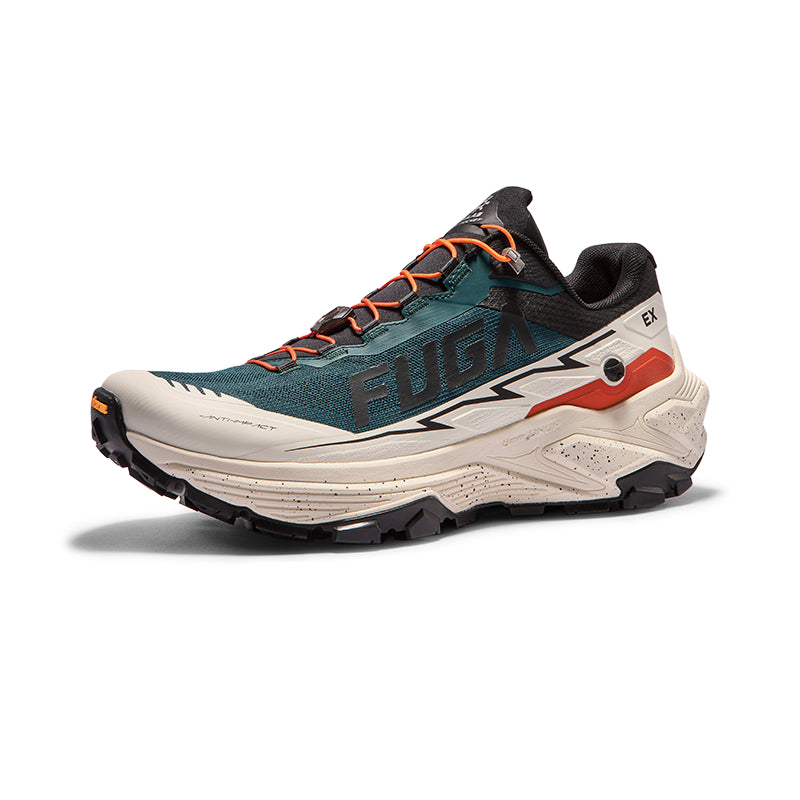
Gran Trail Peñalara’s forest tracks, loose dirt trails, and continuous climbs and descents continuously test your grip and lateral stability. Venturing into technical alpine terrain in standard running shoes compromises foot placement and makes downhill braking precarious. KAILAS FUGA shoes offer different combinations of grip, cushioning and weight. Choose a model according to the race distance, terrain and your preferred ride.
For Technical Versatility & Mid-Distances:
The KAILAS FUGA EX 3 features a Vibram Megagrip outsole with 4mm multi-directional lugs designed to balance forward propulsion, lateral stability and downhill braking while shedding mud. Up top, the proprietary AWS 3.0 two-stage lacing system locks down the midfoot and forefoot separately, preventing toe-slam and foot slip on steep descents.

For Ultra-Distance Cushion & Grip
As mileage stacks up on the 104 km route, cumulative vert demands superior shock absorption and endurance support. The KAILAS FUGA EX 330 is designed for ultra-long races across mixed mountain terrain. Its supercritical foam midsole delivers 23% higher energy return and 21% thicker cushioning compared to the EX 3. Underneath, a tuned Vibram Megagrip layout combines 6mm perimeter lugs with 4mm central and rear lugs, giving you surgical cornering grip, uphill drive, and braking control when your legs are exhausted.
For Speed & Propulsive Energy
Mountain race performance also hinges on how efficiently your shoe converts each foot strike into forward momentum. The KAILAS FUGA EX PRO combines full-length supercritical TPU foam with an integrated X-shaped carbon-fiber plate for responsive rebound and powerful propulsion on climbs. Paired with a zoned Vibram Megagrip outsole, it gives ambitious runners reliable technical bite alongside race-day propulsion.
Hydration Vest for Long Mountain Routes
A race vest with an 8L to 12L capacity is ideal. Aid stations can be spaced 10 to 15 kilometers apart over slow, high-elevation terrain. Carry at least 1.5 liters of fluid capacity between soft flasks and a rear reservoir, along with front pockets to keep gels and sodium tabs within arm’s reach.
Layers for Changing Mountain Weather
Guadarrama ridgelines are notorious for sudden temperature drops. Mandatory gear rules are strictly enforced at kit check. Pack a seam-sealed waterproof jacket (minimum 10,000mm hydrostatic head), an emergency space blanket, gloves, a windproof headband, and a lightweight thermal mid-layer.
Poles and Essential Race-Day Gear
A pair of collapsible carbon trekking poles can help maintain rhythm and significantly reduce leg fatigue across the race's 5,000+ meters of elevation gain, though using them efficiently should be thoroughly practiced during training. Pair these with a primary headlamp throwing at least 300–500 lumens, a reliable backup light source, and a lightweight emergency whistle.
How to Train for Gran Trail Peñalara
Training should prepare you for sustained climbing, technical descents and long hours on your feet. High-altitude trail running also requires preparation for reduced oxygen availability and the demands of sustained mountain effort.
Sample 4-Week GTP Specific Mountain Focus
- Week 1: Long hill repeats (6 x 4-min tempo climbs) + descending agility drills
- Week 2: Back-to-back weekend trails (Saturday 4 hrs technical / Sunday 2.5 hrs vert)
- Week 3: Peak volume: Weighted vest power hiking + night navigation simulation
- Week 4: Vert maintenance taper + nutrition gut-training check
Build Strength for Long Mountain Climbs
Target functional lower-body strength in the gym. Heavy step-ups, Bulgarian split squats, Romanian deadlifts, and calf raises build the musculoskeletal chassis needed to push uphill for hours without cramping.
Practice Power Hiking on Steep Sections
Except for the elite front-runners, much of the vert on GTP is conquered by hiking. Practice lean-in power hiking with your hands pressing against your quads or utilizing double-pole plant rhythm. Set the treadmill to 15% incline or find the steepest local fire road to hone an efficient, sustainable uphill pace.
Train for Long and Technical Descents
Eccentric quadriceps fatigue is what ends most runners' days early. Dedicate weekend sessions to descending fast over loose, rocky trails. Focus on quick cadence, soft knee landings, and looking three steps ahead while pacing yourself when running across technical descents.
Build Endurance for Extended Mountain Efforts
Time on feet matters more than flat weekly mileage. Schedule back-to-back weekend long runs in State or National Parks featuring technical terrain. Spending 4 to 6 hours on Saturday followed by 3 hours on Sunday conditions your mind and body to move efficiently through deep fatigue.
Practice Fueling and Hydration Before Race Day
Long climbs, cold weather and fatigue can make it harder to eat and drink regularly, so practise your fueling plan during long training runs. Train your stomach during long training blocks to absorb 60 to 90 grams of carbohydrates per hour using a combination of chews, energy gels, and real foods like boiled salted potatoes.
FAQs
Where does Gran Trail Peñalara start and finish?
The race starts and finishes in the town square of Navacerrada, a mountain village located in the Community of Madrid, Spain.
Is Gran Trail Peñalara part of the UTMB World Series?
No, Gran Trail Peñalara is an independent, heritage Spanish ultra. While it does not award UTMB Running Stones (which are exclusive to UTMB World Series events), finishers can earn official ITRA Points and contribute to their UTMB Index.
Do you need previous ultra-running experience for Gran Trail Peñalara?
Yes, entry into the flagship 104 km GTP requires verifiable trail experience. Organizers review qualifying race finishes to ensure athletes possess adequate technical competence and mountain safety awareness.
Where can you find the official Gran Trail Peñalara route and GPX?
Official GPX tracks and elevation profiles are hosted directly on the official race website (grantrailpenalara.com). Organizers typically release finalized files a few weeks prior to race day following park authority approvals.
What should you check before race day?
You should review the mandatory gear list, verify weather forecasts for high-altitude passes, and inspect your gear. Make sure your headlamp batteries are fully charged, your GPX tracks are loaded onto your GPS watch, and your shoes are broken in with fresh tread.
Conclusion
Gran Trail Peñalara combines long-distance running with the climbs, rocky trails and changing conditions of the Sierra de Guadarrama. Before race day, review the current route and mandatory kit list, then prepare with training that reflects the course demands. A suitable distance and steady pacing can help you approach the event with a clearer plan.