






Tor des Géants: What to Know About the 330 km Race
The Tor des Géants takes runners through Italy's Aosta Valley across 330 kilometers (205 miles) and roughly 24,000 meters of vertical gain. While the sheer distance is daunting, the race is truly defined by sustained alpine climbs, technical descents, volatile weather, and relentless sleep deprivation. This comprehensive guide covers the course profile, mandatory gear, training strategies, and key logistical differences for athletes transitioning from North American 100-milers like Hardrock or Western States.
What Is Tor des Géants?
Before lining up in Courmayeur, every runner must understand the sheer scale of the playground they are entering. The Italian Alps deliver terrain far steeper and wilder than almost anything found on standard racing circuits.
A Non-Stop Race Around the Aosta Valley
Tor des Géants, often referred to simply as TOR330, is a single-stage, non-stop mountain ultramarathon that loops entirely around the Autonomous Region of Valle d'Aosta. Unlike traditional stage races where the clock stops each evening for catered meals and warm camp beds, the clock at TOR never stops. From the moment the starting horn sounds, runners must balance movement, rest, and refueling entirely on their own terms.
The Tor des Géants Routes
The race route connects the two High Routes (Alte Vie) of the Aosta Valley: Alta Via 1 and Alta Via 2. Traversing footpaths at the base of Europe’s highest summits—Mont Blanc, the Matterhorn (Cervino), Monte Rosa, and the Gran Paradiso—runners pass through protected regional parks, ancient hamlets, and high alpine cols, creating a sweeping 330-kilometer (roughly 205-mile) circumnavigation.
TOR330 Race Dates and Location
TOR330 runs every September, starting and finishing in Courmayeur, a town tucked under Mont Blanc. Early to mid-September represents the sole viable window for a full circumnavigation, falling just after summer heat abates and immediately before early autumn blizzards lock down the high passes above 2,500 meters.
Around 24,000 m of Elevation Gain
Numbers don't always tell the full story, but 24,000 meters of vertical gain is hard to ignore. That's about three Everests from sea level. The route crosses over 25 major passes, and most of the race sits above 2,000 meters. The race reaches its literal peak at Col Loson (3,299 m / 10,823 ft) before later tackling the iconic Col Malatrà (2,925 m) on the final push back to Courmayeur. It’s not just the sheer distance, but the constant 25+ major passes and prolonged exposure to thin alpine air.
|
Key Race Metric |
Specification |
|
Total Distance |
~330 km (205 miles) |
|
Total Elevation Gain / Loss |
~24,000 m+ / 24,000 m- |
|
Highest Point |
Col Loson (3,299 m / 10,823 ft) (Iconic final pass: Col Malatrà at 2,925 m) |
|
Start / Finish Location |
Courmayeur, Valle d'Aosta, Italy |
|
Time Limit |
150 Hours |
|
Major Life Bases |
6 (Valgrisenche, Cogne, Donnas, Gressoney, Valtournenche, Ollomont) |
Why Is the Tor des Géants So Difficult?
While a typical 100-mile race in the States is a test of sustained leg speed and continuous running, TOR330 is an expedition-style battle against nature, sleep deprivation, and cumulative physical trauma.
The 150-Hour Cutoff and Time Barriers
Runners are given a maximum time limit of 150 hours (just over six days) to cross the finish line. Strict intermediate time barriers are enforced at every major aid station and life base. Fall behind the pace, and your tracker is cut immediately—there is no grace period when safety in the high mountains is at stake.
Long Climbs and Steep Technical Descents
Ascents at TOR are rarely rolling hills. Instead, athletes grind out sustained 1,000-to-1,500-meter climbs that take hours of relentless pole work, immediately followed by plummeting, knee-crushing technical descents over loose scree, wet roots, and jagged granite steps. These continuous eccentric muscle contractions can shred your quads within the first 48 hours if pacing is mismanaged.
Sleep Management During a Multi-Day Race
Top front-runners might push through on as little as 3 to 6 hours of sleep across the entire week, while mid-pack finishers target strategic 90-minute sleep cycles at life bases or quick 20-minute trailside dirt naps. Finding your personal threshold between pushing forward and avoiding sleep-induced disorientation on exposed ridgelines is the race's greatest mental puzzle.
Eating and Hydrating for Several Days
You're burning 8,000–12,000 calories a day. Gels alone won't cut it for 330 km. Your gut needs real food: polenta, cheese, pasta, cured meat. At altitude, appetite drops, so you have to eat even when you don't want to. Train with real food, not just sugar. If you don't practice it, it'll fall apart on race day. Test it now, not when it matters.
Foot Problems and Physical Fatigue
The Alps keep your feet wet. Morning dew, creek crossings, rain- it adds up. Choosing shoes with the right waterproof protection and breathability can help manage long hours in changing mountain conditions. Joints swell. Your back aches from carrying gear. By day four, just walking to the next aid station feels like a task. You don't avoid it, but you can manage it. Dry socks at checkpoints, tape before it starts, lube that holds up. Little things matter, because the little things become big problems after a hundred miles.
What Gear Do You Need for Tor des Géants?
Alpine survival takes precedence over running fast. When you are hours away from civilization in sub-freezing temperatures, your gear is your lifeline. Selecting the right pair of trail running shoes helps runners match grip, cushioning, and protection with demanding mountain terrain.
Mandatory Gear for the Entire Race
Race organizers enforce strict mandatory checks at bib pick-up and random checkpoints along the route. Your core kit must include survival blankets, dual high-output headlamps with backup batteries, an alpine whistle, an adhesive elastic bandage, thermal layers, and a certified waterproof jacket with a hood rated for severe mountain weather.
Clothing for Cold, Rain, Snow, and Wind
Temperatures can plunge from a sunny 20°C (68°F) in valley bottoms like Donnas to -5°C (23°F) with howling gale-force winds atop Col Loson in a matter of hours. A versatile layering system featuring merino wool base layers, a packable windproof shell, thermal tights, waterproof over-mittens, and an insulated mid-layer is essential to ward off hypothermia.
Trail Shoes, Poles, and Headlamps
Footwear and poles make or break your journey through the Aosta Valley. The TOR330 course relentlessly transitions between loose scree, deep mud, and slick mountain rock, while continuous steep descents cause feet to slide forward inside your shoes. For this reason, trail running shoes cannot simply prioritize ultralight construction and soft step-in comfort.

Kailas FUGA EX 330 Trail Running Shoes
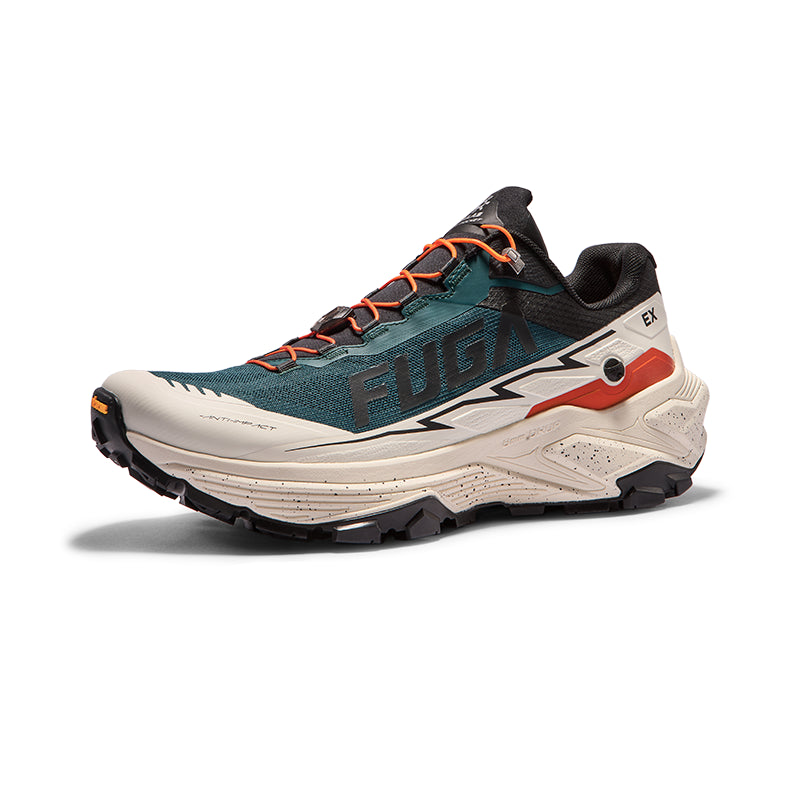
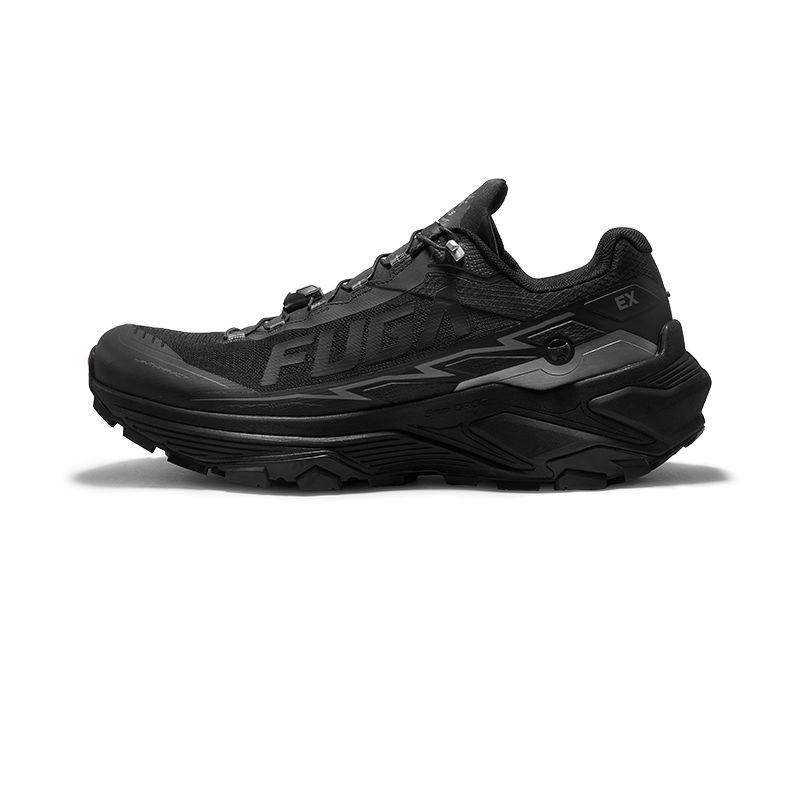
The Kailas FUGA EX 330 is built for long, mixed terrain. Vibram Megagrip outsole, 6 mm lateral lugs and 4 mm central lugs give you traction on corners, scree, and wet descents. The midsole uses supercritical foam, 21% more cushion and 23% more energy return than the EX 3. The AWS 3.0 lacing system locks your foot in and stops internal sliding on long downhills. Secure, cushioned, and built to take the impact over days on rough terrain. That's what you need for 330 km in the Alps.
Kailas FUGA EX 3 Trail Running Shoes
TOR330 demands a lot from your legs. Steep climbs, technical downhills, slick ground. Your training shoes need to handle that volume without wearing you out.
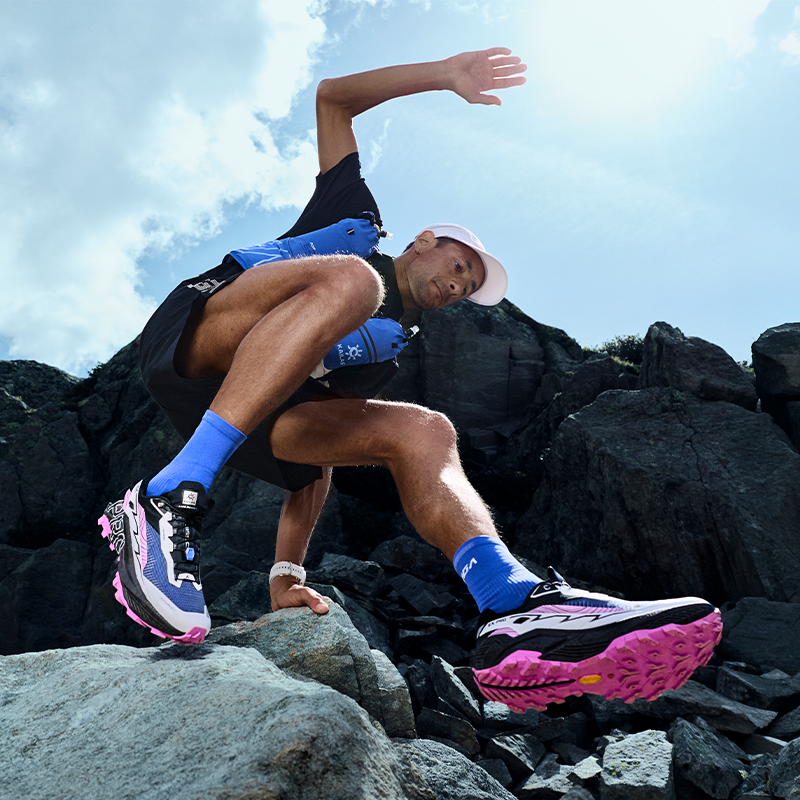
The Kailas FUGA EX 3 handles it well. Multi‑directional triangular lugs for uphill grip, a washboard heel for controlled braking, and Vibram Megagrip on the outsole. The midsole gives 20% more energy rebound. The forefoot and heel are wider, 4% and 15% respectively, so you get more stability and comfort on long training runs. It's built for high‑volume vertical work. That's what you're doing to get ready for TOR. The shoe matches the training.
Kailas FUGA Air 8 Ⅲ Trail Running Vest Pack
For lighting and carrying systems, pack dependable dual headlamps pumping out at least 300+ lumens with long-burn battery profiles, alongside a lightweight, high-capacity running pack like the Kailas FUGA Air 8 Ⅲ Trail Running Vest Pack to keep mandatory gear accessible without bounce or shoulder fatigue.
The TORX Bag System at Life Bases
Every participant receives an official yellow TORX drop bag that race officials transport between the six Life Bases: Valgrisenche, Cogne, Donnas, Gressoney-Saint-Jean, Valtournenche, and Ollomont. Packing this bag efficiently—stashing pre-portioned dry socks, fresh shoes, preferred snacks, charging bricks, and foot repair kits—ensures you spend less time digging through clutter and more time resting.
How to Prepare and Plan for TOR330
Tackling a 330 km mountain race is not something you decide on a whim; it requires months of structured preparation, course familiarization, and logistical precision.
Choose the Right TORX Races for You
The TORX racing ecosystem features several formats depending on your experience:
-
TOR30 (Passage au Malatrà): 30 km / 2,000 m+ — A fast-paced taste of the high cols.
-
TOR130 (Tot Dret): 130 km / 12,000 m+ — A relentless, non-stop technical sprint from Gressoney to Courmayeur with tight cutoffs.
-
TOR330 (Tor des Géants): 330 km / 24,000 m+ — The iconic grand tour around the entire valley.
-
TOR450 (Tor des Glaciers): 450 km / 32,000 m+ — An unsupported high-altitude expedition across unmarked routes for veterans of the 330.
Building Experience for a 330 km Mountain Race
Before entering the lottery for TOR330, you should have several rugged 100-mile finishes under your belt. Races with steep profiles and high elevation—such as the Hardrock 100, Wasatch Front, Ouray 100, or UTMB—provide the essential mental endurance and mountain savvy needed to handle remote high-alpine situations.
Training for Long Climbs and Steep Descents
Forget chasing 6-minute flat-mile paces on local tracks. TOR preparation requires thousands of vertical feet of power-hiking with trekking poles. Spend long weekend blocks on stair climbers, incline treadmills at 15-20% grades, or steep mountain ranges like the Colorado Rockies, Cascades, or White Mountains to build eccentric quad strength and durable connective tissue.
Practicing Night Running, Sleep, and Nutrition
Set your alarm for 2 AM and head out for a four‑hour hike with your headlamp. Get used to moving in the dark when you're already tired. Practice napping on a foam mat after hard efforts, just to see if you can actually switch off. And eat warm solid food while standing. Rice, mashed potatoes, soup, cheese. Figure out what sits well when you're on your feet. Training is more than miles. It's about the things you'll face on race day: the dark, the fatigue, the food. Test all of it.
Testing Gear, Food, and Foot Care Before Race Day
Never race in gear you haven't tested. Take your full setup out in real conditions: rain, wind, cold. Your poles, jacket, shoes, socks, all of it needs to work together. Your shoes should also be tested on technical terrain before race day, especially when repeated descents require stable downhill performance to maintain control and reduce foot movement inside the shoe.
Sort out your foot care before you fly. Taping, patches, lube- figure out what stops blisters for you. If you wait until race day, you're gambling. And on a 330‑k course, that's a bet you don't want to lose. Get it right at home, so you're not fixing problems halfway across the Alps.

Planning Travel, Accommodation, and Race Check-In
Most international runners fly into Geneva, Milan Malpensa, or Turin, then take a bus or rental car up to Courmayeur. Book your accommodation months ahead, because the town fills up fast during race week. Get there at least three or four days early. Sort out the jet lag, get through gear check without rushing, and take in the buzz before the start. It's part of the experience, and it helps you line up ready.
FAQs
What food is at the aid stations?
TOR stations prioritize real, digestible fuel over engineered sports nutrition to sustain multi-day efforts:
-
Standard Aid Stations & Refuges: Offer hot tea, coffee, broth, pasta, polenta, cured meats, regional cheeses, fresh bread, and fruit.
-
The 6 Major Life Bases: Provide complete, freshly cooked meals with complex carbohydrates and proteins (steamed rice, warm soups, and hot meat dishes) to support deep recovery and long-term caloric replenishment.
Do you have to navigate the route yourself?
Yes. The trail's marked with yellow flags and arrows, but alpine fog, snow, and night running make them hard to spot. You need a GPS watch or a device with the official GPX file. No exceptions.
How many people actually finish?
About 50‑60% each year. Weather, blisters, stomach issues, missed cutoffs- it adds up. The attrition rate is high. You need more than just fitness to get through.
Can international runners enter?
Yes. Spots are allocated through a lottery with country quotas. Pre‑registration usually opens in February on the TORX site. North American runners have the same shot as anyone else.
Conclusion
Circling the giants of the Aosta Valley is about more than running. Patience, self‑preservation, logistics. They're as important as fitness. This 330‑k loop demands steady pacing, solid nutrition, and gear that holds up when conditions turn. Build your vertical endurance, prepare for the terrain, and you give yourself a real shot at finishing one of the toughest ultras in the mountains. No secrets. Just respect for the course and the work it takes.