






Montreux Trail Race : distance et terrain en Suisse
Le Montreux Trail Festival offre une expérience radicalement différente de la plupart des courses de trail britanniques. Le départ se fait au bord du lac Léman et l'ascension se poursuit directement dans les Alpes suisses, avec de longues étapes, des sentiers techniques et des descentes abruptes en véritable terrain de montagne.
Ce guide vous présentera les distances, le dénivelé et la nature du terrain lors de la course. Nous aborderons également les points essentiels à prendre en compte pour bien vous préparer, notamment le choix des chaussures de trail adaptées au parcours.
Qu'est-ce que la Montreux Trail Race en Suisse ?
Avant d'aborder les distances et le terrain, il est utile de comprendre ce qui fait de Montreux un défi si différent des courses de trail typiques du Royaume-Uni.
Lieu de la course
L'événement se déroule dans la magnifique région de la Riviera suisse, autour de la ville animée de Montreux, au bord du lac. Les coureurs partent des eaux scintillantes du lac Léman pour rejoindre les hauts sommets des Alpes vaudoises, en suivant un parcours spectaculaire qui relie les sentiers aménagés des rives du lac à la nature sauvage et préservée de la montagne.
Pour quels coureurs cette course est-elle la plus adaptée ?
Cette course est faite pour les coureurs d'endurance autonomes, les adeptes de la course en montagne en quête de défis, et tous ceux qui apprécient les ascensions raides et soutenues. Si vos jambes connaissent les montées incessantes du Lake District sur le bout des doigts, mais que vous êtes prêt à mettre vos poumons à l'épreuve en altitude, les boucles de Montreux offrent un mélange exceptionnel de course technique et de paysages à couper le souffle.
Distances et dénivelé positif de la course de trail de Montreux
Avant de préparer votre sac et de prendre un vol depuis Heathrow, il est crucial de bien comprendre l'ampleur des défis proposés tout au long du week-end de l'événement.
Aperçu des distances des courses principales
Le Montreux Trail Festival propose plusieurs courses adaptées à tous les niveaux. L'épreuve phare est le MXALPS, un parcours d'environ 60 kilomètres sur un terrain exigeant. Il y a aussi le MXSKY, plus court mais plus intense, d'environ 30 kilomètres. Et pour les plus téméraires, les épreuves d'ultra-distance vous emmènent au cœur de la haute montagne.
| Course | Distance | Gain d'altitude | Difficulté |
| MXSKY | ~30 km | 2100m+ | Avancé |
| MXALPS | ~60 km | 4000m+ | Expert |
| Formats ultra | 60 km et plus | Ascension massive | Coureurs expérimentés |
Le dénivelé de chaque voie
Le dénivelé de ces courses est tout simplement impressionnant comparé à un marathon de trail britannique classique. Le MXALPS de 60 km vous impose un dénivelé positif stupéfiant de 4 000 mètres, tandis que le MXSKY de 30 km en totalise plus de 2 100. Autrement dit, vous gravissez et descendez le Ben Nevis plusieurs fois en un seul après-midi.
Pourquoi le dénivelé est plus important que la distance
Dans les Alpes suisses, se fier uniquement à la distance horizontale est une erreur fatale ; c’est le dénivelé positif considérable qui détermine véritablement votre temps final et votre dépense énergétique. Une course alpine de 30 km avec 2 000 mètres de dénivelé vous prendra beaucoup plus de temps – et exigera une endurance musculaire bien supérieure – qu’une course de trail classique de 30 km sur terrain plat, ou même qu’un sentier côtier vallonné comme ceux que l’on trouve en Angleterre.

Préparation pour le sentier de Montreux
S'attaquer aux Alpes suisses implique d'adapter son entraînement et de s'assurer d'avoir l'équipement adéquat aux conditions climatiques.
Entraînement à la course en montée et en descente
Si vous voulez arriver à Montreux en un seul morceau, votre entraînement doit ressembler à une ascension en montagne. Cela implique de longues ascensions et descentes qui mettent vos jambes à rude épreuve. Intégrez ces séances dans un programme structuré. plan d'entraînement pour marathon de trail, Trouvez les pentes les plus raides près de chez vous, faites beaucoup d'exercices excentriques pour renforcer vos quadriceps et entraînez-vous beaucoup en descente. Vos jambes doivent s'habituer à ces descentes abruptes vers le lac.
S'entraîner à manger avant les longues ascensions
Bien s'alimenter est essentiel lorsqu'on gravit une montagne pendant deux heures à un rythme soutenu et régulier. Prenez l'habitude de consommer des glucides à assimilation lente juste avant les grandes ascensions de vos longues sorties du week-end. Ainsi, votre estomac sera capable de digérer correctement malgré l'effort physique.
Choisissez des chaussures de trail pour l'adhérence, l'amorti et les longues descentes.
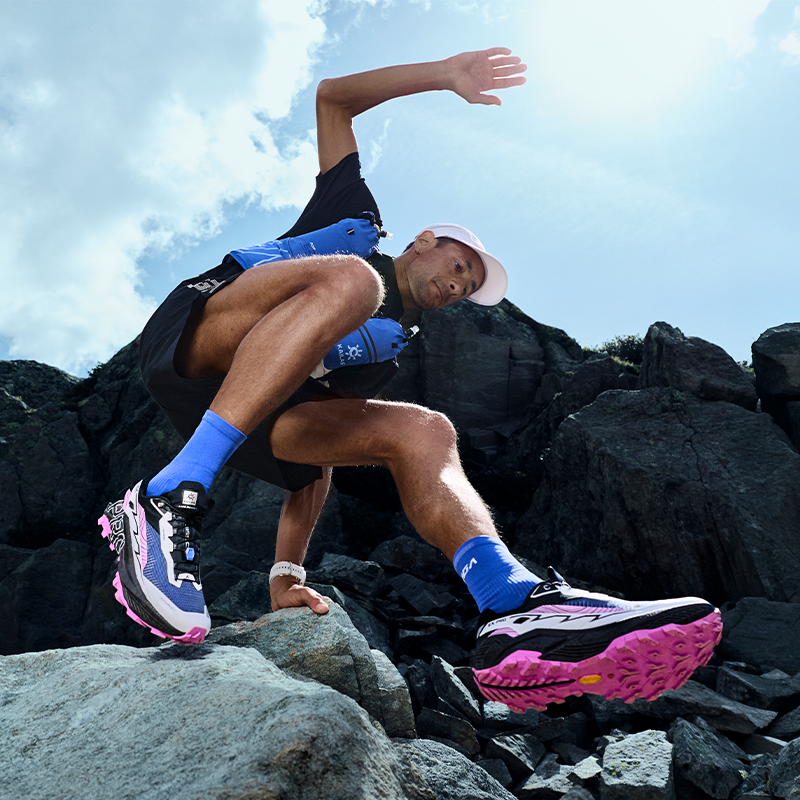
Le choix des chaussures prend toute son importance lorsque le parcours s'aventure dans les sections alpines rocheuses et enchaîne de longues descentes techniques. Contrairement aux sentiers plus plats du Royaume-Uni, Montreux mêle rochers instables, dénivelés importants et des milliers de mètres de descente ; vos chaussures doivent donc offrir une bonne adhérence, une protection efficace en descente et un amorti suffisant pour vous permettre de courir pendant des heures.
Une bonne paire de chaussures peut faire toute la différence. Elles vous donneront confiance sur les terrains difficiles et atténueront l'impact des longues descentes. Privilégiez une semelle extérieure à forte adhérence, un maintien sûr et une semelle intermédiaire capable de résister aux efforts prolongés en montagne.
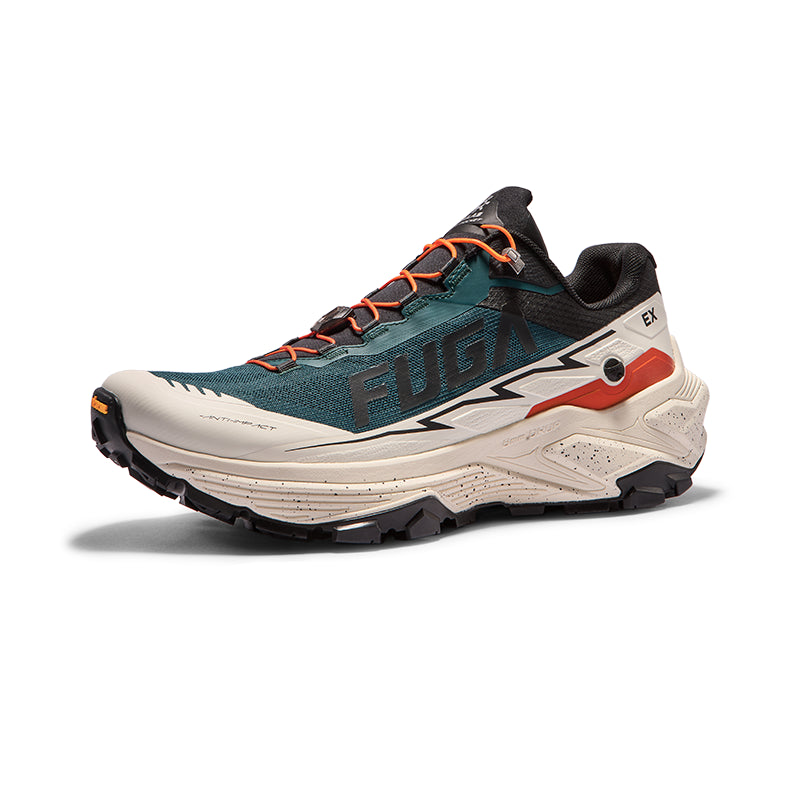
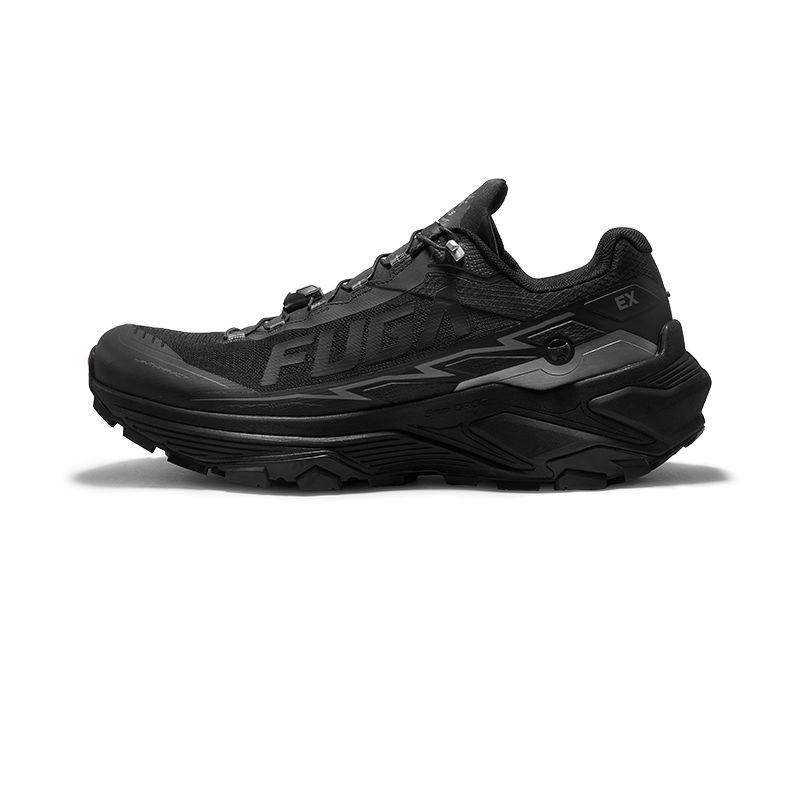
Pour tous ceux qui se préparent pour Montreux, Kailas propose quelques chaussures de trail conçues spécifiquement pour les conditions alpines difficiles :
Kailas
Si vous vous attaquez au MXALPS, course phare de la discipline, ou à l'une de ces épreuves d'ultra-distance aux terrains extrêmement techniques, le
Idéal pour : les ultra-marathoniens aguerris recherchant une adhérence maximale, une réactivité optimale et une protection articulaire efficace sur les sentiers techniques de haute altitude.
Kailas
Pour les coureurs s'attaquant à des parcours mixtes comme le MXSKY, où chemins forestiers, hameaux alpins et crêtes exposées entrent tous en jeu, le
Idéal pour : les coureurs recherchant un confort maximal, une adhérence polyvalente sur différents terrains et un maintien sûr qui minimise les risques d'impaction des orteils dans les descentes.
Préparez votre sac pour la pluie, le vent, le froid et les nuits blanches.
La météo en montagne est réputée pour son imprévisibilité, alors ne négligez pas votre équipement. Prévoyez une veste imperméable de qualité avec coutures étanches, des sous-vêtements thermiques et des gants coupe-vent. Léger chapeaux de trail Elles sont également utiles pour se protéger du soleil, de la transpiration et d'une pluie fine sur les passages exposés, sans prendre beaucoup de place dans votre gilet. Emportez une lampe frontale fiable avec des piles de rechange si vous risquez de devoir affronter la fraîcheur des nuits alpines.

Quel type de terrain les coureurs devront-ils affronter ?
Dès le départ, le parcours est en perpétuelle évolution. Vous alternerez sentiers forestiers, passages rocheux, crêtes exposées et descentes abruptes, chaque section présentant un nouveau défi.
Longues ascensions à travers les Alpes
Vous devrez affronter des ascensions exigeantes et impitoyables qui vous feront quitter les vallées luxuriantes pour vous hisser en haute montagne. Il s'agit souvent de sentiers étroits taillés à flanc de montagne ; vous devrez donc trouver un rythme de marche régulier et puiser dans vos réserves mentales, surtout lorsque vous lèverez les yeux et verrez les lacets s'étendre à perte de vue.
Descentes techniques vers Montreux
C'est dans les descentes qu'il faut vraiment être vigilant. Des pentes abruptes, des racines apparentes, des éboulis et des rochers coupants : la concentration est mise à rude épreuve. En redescendant vers le lac, on perd des milliers de mètres d'altitude, et une seule erreur peut être fatale. Il faut donc rester sur ses gardes.
Sentiers forestiers, crêtes, villages et vues sur le lac
Le paysage est absolument époustouflant. Vous traverserez d'épaisses forêts de pins ombragées, des crêtes dégagées offrant des vues panoramiques, et longerez de charmants villages de montagne suisses. Le tout se déroule sur fond de l'incroyable lac Léman, ce qui est une excellente chose, car cela vous offre autre chose à admirer que la douleur dans vos jambes.
Comment le terrain modifie votre allure de course
Sur ce type de parcours, il vous faudra complètement oublier votre stratégie habituelle de course sur route. Les chemins forestiers lisses vous permettront de maintenir une foulée régulière et fluide, tandis que les passages rocailleux escarpés et les crêtes en haute altitude vous obligeront à adopter une allure de marche forcée en montagne, rendant ainsi les indicateurs de rythme moyen largement insignifiants.
La course de trail de Montreux est-elle vraiment si difficile ?
Il vaut mieux être honnête avant d'évaluer cet événement : c'est une entreprise incroyablement difficile qui force le respect absolu de chaque concurrent.
Les montées peuvent rompre votre rythme
Contrairement aux collines régulières et prévisibles de nombreuses courses de trail classiques, ces ascensions alpines sont si longues et abruptes qu'elles perturbent complètement votre cadence de course habituelle. Vous vous retrouverez à alterner marche rapide et course soutenue pendant des heures, mettant à rude épreuve votre patience et votre stabilité.
Les longues descentes peuvent être très éprouvantes pour les jambes.
De nombreux coureurs sous-estiment les descentes, mais une descente de 1 500 mètres d'affilée sollicite énormément les quadriceps. Sans un entraînement adéquat et des chaussures très amortissantes, les jambes peuvent facilement flancher bien avant les derniers kilomètres.
Le temps peut changer rapidement au-dessus de Montreux
Vous pourriez facilement commencer votre matinée sous un soleil radieux et chaud au bord du lac et vous retrouver à lutter contre des vents glacials, un brouillard épais ou des orages d'été soudains une fois que vous dépassez les 2 000 mètres d'altitude. Si vous avez une expérience limitée avec course en sentier en haute altitude, Entraînez-vous à adapter votre effort à votre respiration et aux conditions plutôt que de maintenir votre rythme habituel. Cette imprévisibilité contribue à rendre la course si exigeante. Vous devez prendre des décisions en fonction des conditions, et pas seulement de votre condition physique.
L'heure limite dépend de plus que de la vitesse.
Les temps limites de l'épreuve sont calculés en tenant compte du terrain alpin, mais ils peuvent surprendre les coureurs imprudents en cas de difficulté. La gestion des obstacles techniques, l'alimentation et le mal d'altitude vous ralentiront bien plus que la simple fatigue physique ; l'efficacité aux points de ravitaillement est donc primordiale.
FAQ
Quelle est la longueur du Montreux Trail Race ?
Plusieurs distances sont proposées, allant d'un parcours exigeant de 30 kilomètres à de véritables ultras de plus de 60 kilomètres. Le tracé exact dépend de la catégorie choisie, vous permettant ainsi d'opter pour une course adaptée à vos objectifs d'endurance.
Quelle est la distance la plus difficile du Montreux Trail Festival ?
Les épreuves d'ultra-trail les plus longues et le MXALPS 60k sont généralement considérées comme les plus difficiles, principalement en raison de l'énorme dénivelé positif qu'elles imposent. On parle de plus de 4 000 mètres d'ascension incessante sur un terrain alpin très technique.
Le MXSKY est-il adapté aux débutants ?
Pas vraiment. Le MXSKY est peut-être plus court (30 km), mais il représente tout de même un défi alpin de taille avec plus de 2 100 mètres de dénivelé positif et des descentes techniques. Une solide expérience du VTT est indispensable avant de s'y attaquer.
Quel type de terrain emprunte la Montreux Trail Race ?
Vous découvrirez une grande variété de terrains : singletracks alpins, crêtes rocheuses exposées, sentiers forestiers et descentes techniques sur schiste. Vous traverserez également de petits villages de montagne avant de terminer votre parcours sur des chemins plus tranquilles longeant le lac Léman.
Avez-vous besoin de chaussures de trail spéciales pour Montreux ?
Absolument. Il vous faudra de véritables chaussures de trail offrant une bonne adhérence et un amorti optimal. Les chaussures de route classiques ou les modèles de base ne suffiront pas : elles n’offrent ni l’adhérence nécessaire sur les rochers instables en montagne, ni la protection indispensable à vos articulations lors des longues descentes.
Conclusion
La Montreux Trail Race est une épreuve de montagne exigeante. Elle requiert une préparation rigoureuse, de la patience et un équipement adapté. Longues ascensions, descentes techniques et conditions alpines changeantes mettront votre condition physique et votre jugement à rude épreuve du début à la fin.
En vous entraînant correctement, en élaborant un plan nutritionnel solide et en chaussant des chaussures de trail fiables comme les Kailas