






Dolomiti Extreme Trail : distances, itinéraires et informations sur la course
Peu de courses de montagne incarnent aussi bien l'authenticité et la sauvagerie de la course alpine que la Dolomiti Extreme Trail (DXT) en Italie, dans le Val di Zoldo. Pour les coureurs britanniques habitués aux sommets humides du Lake District ou aux crêtes escarpées de Snowdonia, les ascensions vertigineuses et le terrain technique calcaire de la DXT offrent une expérience radicalement différente.
Ce guide aborde les distances de course (de 11 km jusqu'au colossal 103 km), les profils de parcours exigeants et les principaux aspects logistiques à connaître. Il fournit également des conseils pratiques de préparation et des recommandations d'équipement adaptées pour aider les coureurs britanniques à relever ce défi ultime, qualificatif pour l'UTMB.
Quelles sont les distances disponibles sur les sentiers extrêmes des Dolomites ?
Les organisateurs proposent six distances de course principales, ainsi qu'une épreuve junior. Chaque parcours emprunte une portion différente de la boucle du Val di Zoldo, offrant ainsi un défi adapté à chaque niveau d'expérience alpine.
-
103 km Ronda delle Cime (6 400 m+) : L'épreuve ultime du week-end. Un parcours alpin complet et brutal autour des sommets de la vallée de Zoldo, avec des départs à minuit, des arêtes techniques et des ascensions impitoyables réservées aux ultra-marathoniens d'élite.
-
72K Euforia (4 950 m+) : Distance plus courte, dénivelé plus important. Ce parcours évite la boucle sud tout en conservant le terrain accidenté et les hauteurs. L'étape idéale avant le 100 km.
-
55K Mitica (3 800 m+) : Le marathon de montagne classique. Des paysages époustouflants mais exigeants – traversant des forêts de pins, des prairies alpines et des cols rocheux escarpés qui requièrent une concentration maximale.
-
35K Célestiale (2 100 m+) : Une sortie rapide mais exigeante. Elle contourne les sommets les plus élevés et les plus exposés, mais propose de nombreux singletracks techniques. Un parcours très apprécié des compétiteurs de courte distance.
-
22K Emozione (1 120 m+) : Une excellente introduction au trail. Le parcours évite les éboulis vertigineux mais propose des ascensions abruptes et des descentes rapides en forêt.
-
11K Allegria (700m+) : Conçue pour la vitesse, les débutants ou une course plus tranquille. Elle file à travers les vallées et les charmants hameaux, offrant des vues magnifiques et une conduite sans la moindre appréhension.
-
Mini DXT : Une course non compétitive et dynamique sur un circuit court et sécurisé près de la ligne d'arrivée, permettant aux enfants et aux jeunes adolescents de partager l'ambiance d'un événement international.
Aperçu des distances de course DXT
| Distance/Événement | KM | Escalade (M) | Densité verticale (montée/km) | Difficulté technique | Point fort/Idéal pour |
| 103K Ronda delle Cime | 103 | 6 400 | ~70 m/km | Extrême | L'odyssée alpine ultime : Boucle complète de la vallée avec des crêtes techniques en haute altitude, accessibles de nuit. Réservée aux ultra-marathoniens chevronnés. |
| 72K Euforia | 75.7 | 4 950 | ~77 m/km | Haut | Le coup de poing de l'élévation : Plus courte que l'épreuve principale, mais avec un dénivelé plus important. L'étape idéale avant de se lancer dans un 160 km. |
| 55K Mitica | 55 | 3 800 | ~69 m/km | Modéré à élevé | Marathon classique en montagne : Une variété époustouflante de forêts, de prairies ouvertes et de cols rocheux techniques. Exige concentration et stabilité. |
| 35K Célestiale | 36.2 | 2 100 | ~57 m/km | Modéré | Rapide & Punir : Évitez les passages extrêmement exposés, mais privilégiez les singletracks rapides et techniques. Un parcours de prédilection pour les élites du short-track. |
| 22K Émotion | 21.4 | 1 120 | ~59 m/km | Faible à modéré | Le jeu des recrues des Alpes : Elle évite les pentes d'éboulis vertigineuses mais propose des montées abruptes et des descentes rapides en forêt. Une excellente introduction. |
| 11K Allégresse | 11.9 | 576 | ~64 m/km | Faible | Vitesse & Ambiance: Vallées en contrebas, hameaux charmants et sentiers vallonnés. Ambiance conviviale et sans pression, idéale pour les débutants comme pour les randonneurs confirmés. |
À quoi ressemblent les itinéraires de trail extrême des Dolomites ?
Les parcours DXT sont réputés pour leur grande variété, vous emmenant dans un voyage extraordinaire à travers des environnements alpins très contrastés qui exigent une adaptation tactique constante.
Sentiers forestiers et sections alpines rocheuses
Les premiers tronçons offrent des sentiers forestiers humides et jonchés de racines qui cèdent rapidement la place à des singletracks alpins accidentés. Au-dessus de la limite des arbres, la terre meuble des sous-bois se transforme en calcaire escarpé, obligeant à adapter instantanément sa foulée et le placement de ses pieds pour garder l'équilibre.
Éboulis et descentes techniques
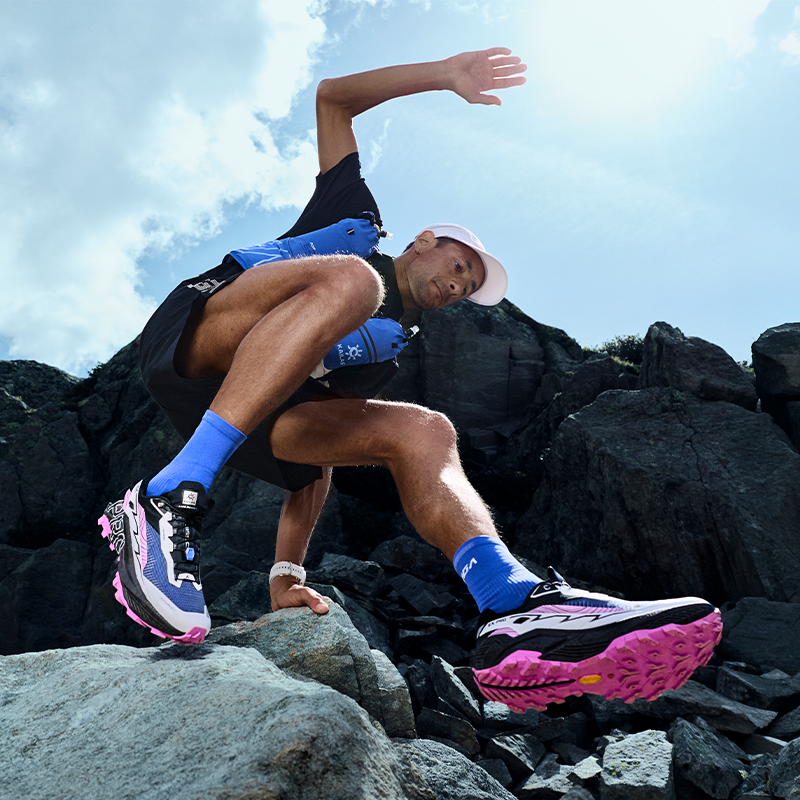
Ce qui distingue vraiment le DXT, ce sont ses éboulis réputés et ses descentes techniques et abruptes. Descendre ces champs de pierres instables exige un mélange d'assurance, d'agilité et de souplesse abdominale – un style de course à mille lieues des descentes rebondissantes sur les collines herbeuses et humides auxquelles nous sommes habitués.
Cols de haute montagne autour du Val di Zoldo
Les itinéraires les plus longs serpentent à travers les imposants massifs du Pelmo et de la Civetta, franchissant des cols culminant à plus de 2 000 mètres. Là-haut, l’air se raréfie, le vent souffle plus fort et les panoramas sont absolument époustouflants : une juste récompense pour toute cette ascension, avec les Préalpes vénitiennes qui s’étendent à perte de vue.
Villages pittoresques le long des routes
Pour rompre l'isolement des hauts sommets, les itinéraires descendent régulièrement vers les villages alpins pittoresques qui parsèment le Val di Zoldo. Traverser ces hameaux historiques est un véritable remontant pour le moral : les habitants, massés dans les ruelles pavées, vous encouragent avec cet enthousiasme italien si communicatif.
Postes de secours et points de coupure
Les organisateurs ont installé des points de ravitaillement bien fournis aux endroits stratégiques du parcours, qui servent également de points de contrôle stricts pour les temps limites. Vous y trouverez tout le nécessaire pour vous ravitailler en montagne : eau, boissons énergétiques, bouillon chaud, fromage local… De quoi vous donner l’énergie nécessaire pour boucler la course.
Changements météorologiques et variations d'itinéraire
La météo en haute montagne est extrêmement capricieuse : elle peut basculer en quelques minutes d'un soleil radieux à de violents orages ou à de la pluie verglaçante. C'est pourquoi l'équipe DXT prévoit plusieurs itinéraires de moindre altitude, prêts à être empruntés rapidement si les conditions météorologiques extrêmes rendent les cols impraticables.

Quel parcours extrême des Dolomites choisir ?
Le Dolomiti Extreme Trail (DXT) est loin d'être une promenade de santé. Choisissez judicieusement votre parcours et vous vivrez une expérience alpine inoubliable. Si vous en faites trop, vous risquez de devoir abandonner à un poste de ravitaillement.
-
Faites correspondre votre expérience : Soyez honnête avec vous-même. Vous n'avez couru que des marathons sur sentier plat ? Vous lancer directement dans un 103 km, c'est prendre des risques inutiles. Choisissez une distance qui vous pousse à sortir de votre zone de confort sans vous épuiser.
-
Calculer la densité verticale : Ne vous contentez pas de compter les kilomètres. Un 55 km avec 3 800 mètres de dénivelé positif prend bien plus de temps qu'un ultra-trail classique. Adaptez votre allure et votre alimentation en fonction du temps que vous passerez à courir, et non de la distance théorique.
-
Évaluation du terrain & Exposition: Les sections en altitude du DXT présentent des dénivelés abrupts et des passages techniques sur rocher instable où il vous faudra vous aider de vos mains pour garder l'équilibre. Si vous avez le vertige ou si vous n'aimez pas les terrains instables, privilégiez les parcours de 22 000 ou 35 000 pieds.
-
Tenez compte de la lumière & Nuit: Les courses de 103 km et de 72 km exigent des stratégies de course totalement différentes pour la nuit. La 103 km commence à minuit, ce qui signifie que vous affronterez les premières ascensions techniques et exigeantes dans l'obscurité la plus totale, avec un cerveau en manque de sommeil. La 72 km commence au lever du soleil, mais à moins d'être un coureur d'élite, l'immensité du parcours fait que… volonté Vous serez à la poursuite du coucher du soleil. Préparez-vous à négocier des descentes techniques à la lueur de votre lampe frontale en fin de course, lorsque vos jambes seront déjà épuisées.
-
Débutant dans les Alpes ? Commencez petit : Vous débutez en course alpine ? Optez pour le 22 km (Emozione) ou le 35 km (Celestiale). Vous découvrirez la difficulté du terrain et l’ambiance électrique sans prendre de risques physiques importants.
Comment se préparer pour le sentier extrême des Dolomites ?
Se préparer à une épreuve de cette envergure exige une approche rigoureuse et structurée, tant pour l'entraînement que pour l'équipement. Sur des parcours aussi exigeants, l'improvisation est impossible. Il est indispensable d'adapter son programme hebdomadaire et ses choix de matériel aux spécificités de la course à pied en Alpes.
Entraînez-vous aux longues montées
Pour survivre aux ascensions impitoyables du Val di Zoldo, votre plan d'entraînement pour la course en sentier Il est essentiel d'intégrer des efforts longs et soutenus en montée pour développer l'endurance musculaire. Si vous n'avez pas accès à des montagnes à proximité, il est indispensable de passer du temps sur un tapis roulant fortement incliné, ou d'effectuer des répétitions continues en côte sur la pente la plus raide près de chez vous, pour renforcer vos jambes.
Développer sa force pour les descentes techniques
Si les montées mettent vos poumons à l'épreuve, ce sont les descentes brutales qui risquent de détruire vos quadriceps si vous n'êtes pas préparé. Intégrez des exercices de renforcement excentrique – comme les squats lestés, les fentes et les sauts pliométriques sur box – à votre programme d'entraînement pour développer la résistance structurelle dont vos jambes ont besoin pour encaisser des heures d'efforts en descente.
Kailas
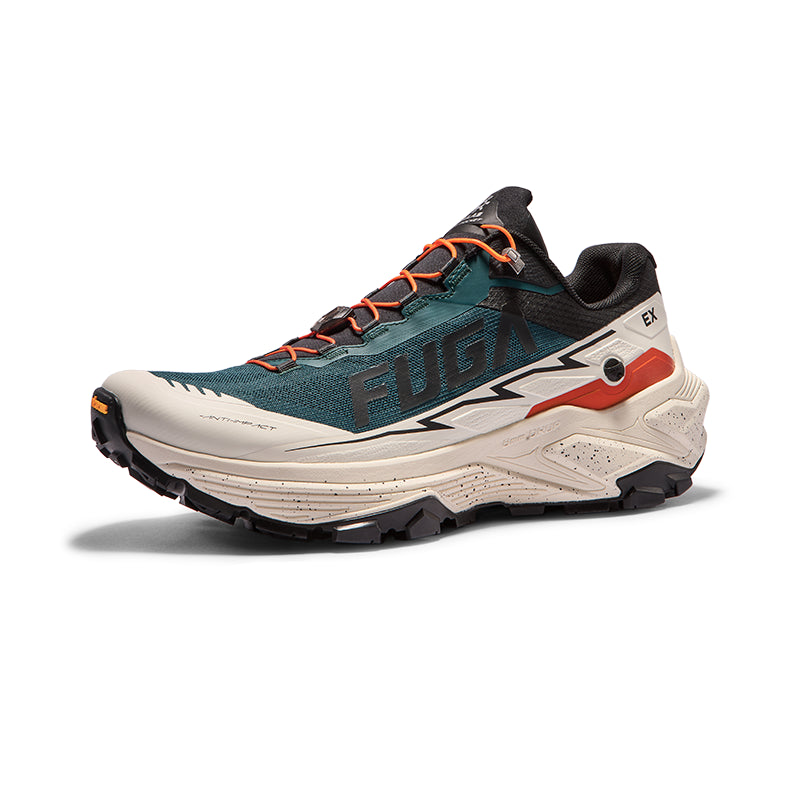
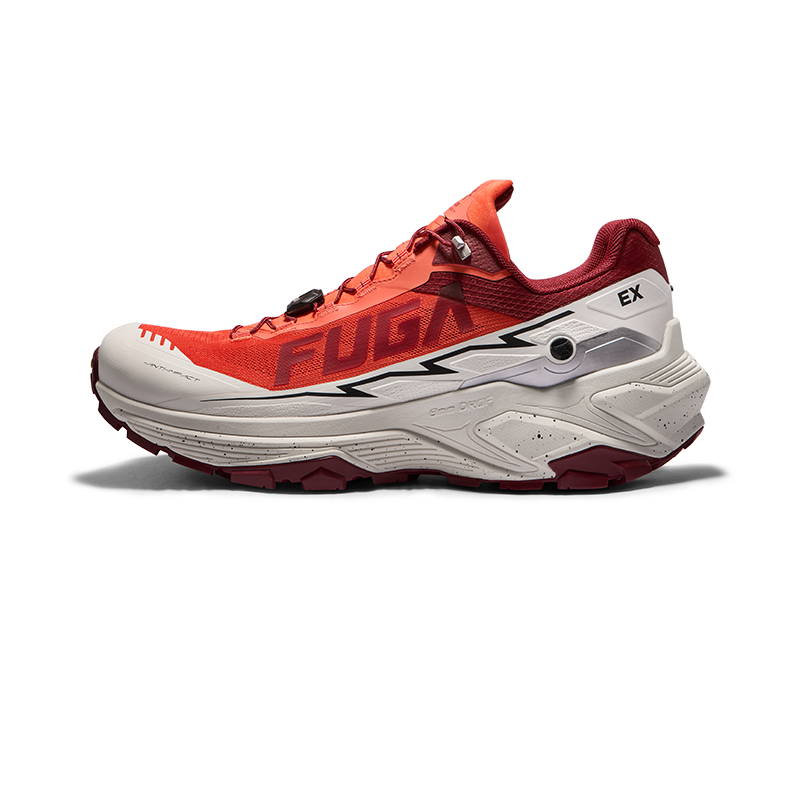
Pour protéger vos pieds lors de ces descentes éprouvantes, il est indispensable d'améliorer vos chaussures. Kailas
Entraînez-vous sur un terrain rocailleux et accidenté.
Dans la mesure du possible, pour vos longues sorties du week-end, privilégiez les sentiers les plus accidentés et rocailleux aux chemins de halage. Apprendre à maîtriser ses appuis sur terrain inégal, à choisir des trajectoires rapides sur les sentiers rocailleux et à développer une bonne stabilité réactive des chevilles sont des compétences essentielles qui vous permettront d'économiser une énergie considérable le jour de la compétition.
Testez votre nutrition en compétition lors de longues courses.
Un ultra-trail alpin est avant tout une épreuve d'alimentation avec une bonne dose de course à pied ; une stratégie nutritionnelle à toute épreuve est donc indispensable. Profitez de vos entraînements longs hebdomadaires pour tester la réaction de votre estomac aux différents gels, barres et aliments solides sous l'effet de l'effort, afin de pouvoir consommer 200 à 300 calories par heure sans problème.
Kailas
Transporter toute cette nutrition en plus de votre équipement obligatoire nécessite une solution de rangement de pointe. Kailas
Choisir des chaussures de trail pour les itinéraires alpins
Vos chaussures de trail classiques peuvent parfaitement convenir aux terrains souples britanniques, mais l'escalade alpine exige des chaussures techniques spécialisées offrant une adhérence exceptionnelle et un maintien précis et sûr afin d'éviter les blessures douloureuses aux orteils sur les terrains escarpés.
Kailas
Pour une chaussure alpine ultime, la Kailas
Vérifiez l'équipement obligatoire avant le jour de la course.
Les organisateurs du DXT imposent une liste stricte d'équipement obligatoire pour des raisons de sécurité, incluant notamment une veste imperméable.

Que doivent savoir les coureurs avant le jour de la course ?
Réussir sa préparation physique ne représente que la moitié du chemin. Si vous gérez sans accroc les aspects administratifs et la logistique de la course, vous arriverez sur la ligne de départ détendu, concentré et en règle pour participer.
Règles d'inscription et de certificat médical
Contrairement aux courses de trail britanniques où il suffit de s'inscrire et de se présenter, la loi italienne exige que tous les participants aux compétitions sportives présentent un certificat médical valide. Un médecin doit signer et tamponner le formulaire médical officiel DXT, attestant de votre aptitude à l'effort intense en altitude. Ce document doit ensuite être téléchargé sur le portail d'inscription bien à l'avance.
Qualification UTMB et points ITRA
Pour les coureurs en quête de points d'index, le Dolomiti Extreme Trail est une épreuve ITRA officiellement reconnue et une course comptant pour l'index UTMB. Terminez la distance choisie et vous accumulerez les points nécessaires pour améliorer votre classement mondial et vous qualifier pour les prestigieuses courses internationales telles que la finale de l'UTMB à Chamonix.
Collecte de bavoirs au village DXT
Le village DXT, véritable cœur de l'événement, est situé à Forno di Zoldo. C'est là que vous récupérez votre dossard, faites vérifier votre équipement, découvrez le village des sponsors en plein air et partagez l'excitation d'avant-course avec des coureurs venus de plus de cinquante pays.
Règles relatives aux postes de secours et à l'autonomie
Les points de ravitaillement sont extrêmement bien fournis, mais le DXT fonctionne selon un principe d'autonomie partielle stricte. Cela signifie qu'il faut emporter suffisamment d'eau et de nourriture pour se déplacer en toute sécurité entre les points de contrôle. Il est également obligatoire d'avoir sa propre tasse réutilisable ; aucune tasse en plastique jetable n'est distribuée sur le parcours.
Mises à jour officielles du parcours avant la course
Assistez à la réunion d'information d'avant-course ou consultez vos courriels la veille du départ pour prendre connaissance des mises à jour officielles concernant le parcours. Les organisateurs de la course suivent de près les conditions en montagne et signaleront tout changement de dernière minute, alerte météo ou modification des horaires limites susceptible d'affecter votre plan de course.
FAQ
Quel équipement vous faut-il pour le sentier extrême des Dolomites ?
Vous devez être muni de l'ensemble des documents obligatoires. équipement de course en sentier Le matériel est fourni par les organisateurs, mais il varie légèrement selon la distance. L'essentiel est toujours d'avoir une bonne veste imperméable.
Quand a lieu le Dolomiti Extreme Trail ?
D'après les organisateurs officiels du Dolomiti Extreme Trail, l'événement se déroule traditionnellement début juin, profitant ainsi des journées plus longues et des conditions alpines stables qui caractérisent le début de l'été. Cette période estivale offre de belles journées et permet d'admirer de magnifiques fleurs alpines, même s'il faut s'attendre à trouver quelques plaques de neige sur les plus hauts cols.
Avez-vous besoin d'un certificat médical pour DXT ?
Oui, un certificat médical valide est obligatoire pour participer au Dolomiti Extreme Trail. La réglementation sportive italienne est stricte à ce sujet. Un médecin agréé doit remplir, signer et tamponner le formulaire médical officiel du DXT, attestant de votre aptitude à la compétition en montagne. Sans formulaire, pas de dossard.
Conclusion
DXT est bien plus qu'une course. C'est un véritable voyage à travers l'un des plus beaux paysages de montagne au monde. Choisissez une distance qui vous convient, suivez un entraînement spécifique à la montagne et équipez-vous comme… Kailas