








Best Hardshell Jackets for Mountain Running: How to Choose the Right One
A sunny trailhead can turn into cold, driving rain the moment you clear the tree line. Worse, the shell that kept you dry on an easy hike will leave you soaked in sweat the second you start climbing. The right hardshell needs to keep the weather out while letting enough heat escape and fit comfortably over a running vest. This guide explains what to look for, how running shells differ from hiking jackets, and which features matter most on the trail.
Why Do Mountain Runners Need a Hardshell Jacket?
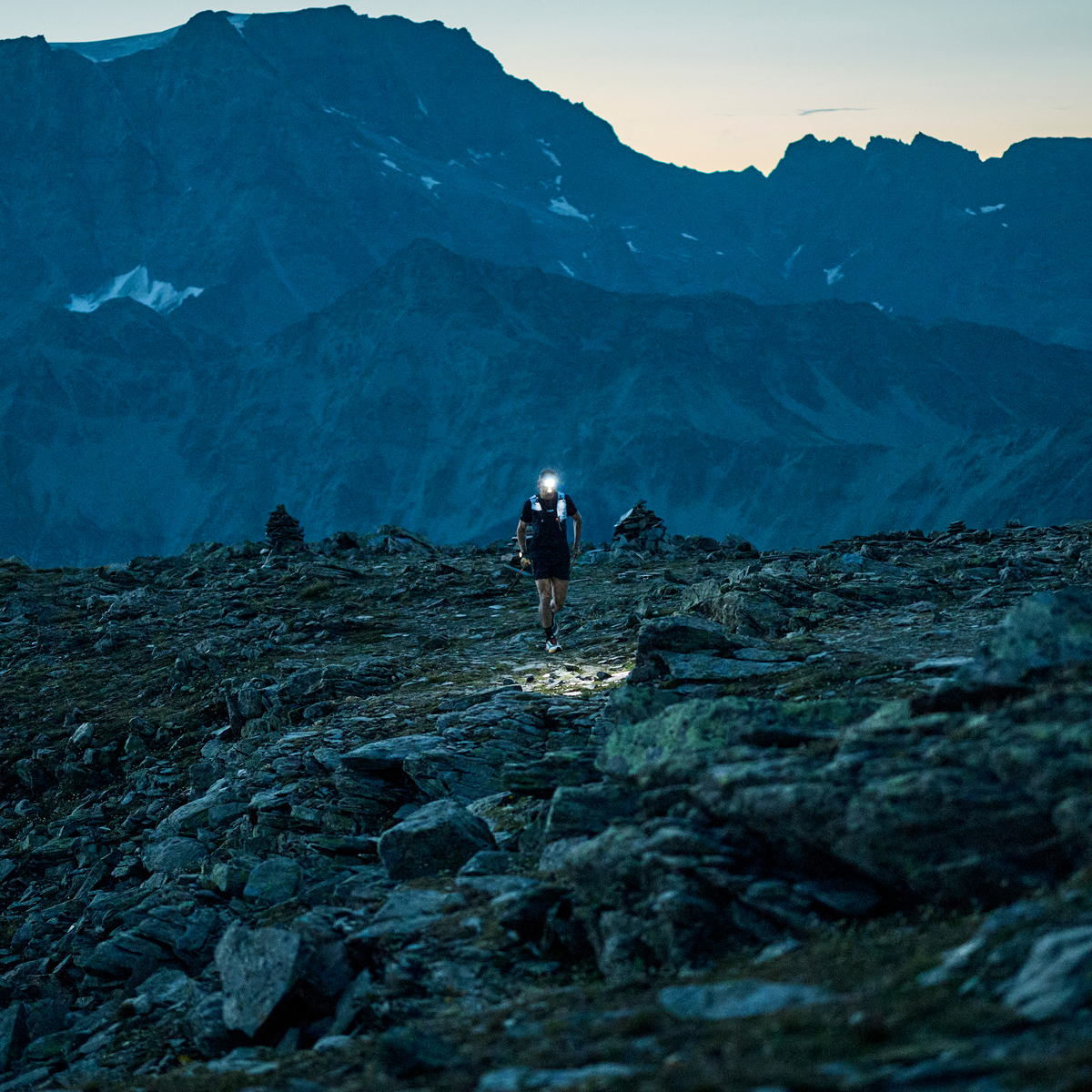
A mountain run can start in mild weather and turn cold and wet once you reach an exposed ridge. A hardshell helps keep out wind and rain, but it also needs to release heat and feel light enough to carry on a long route.
Protection Against Strong Winds and Sudden Rain on Mountain Trails
Weather at altitude can change within minutes. A lightweight windbreaker may handle a brief shower, but understanding how to prepare for running in the rain becomes important when steady rain can soak through your clothing and leave you chilled. A waterproof hardshell gives you a more dependable barrier against driving rain and strong winds when the route offers little shelter.
Breathability and Heat Dissipation During Uphill Running
A hard climb can leave you sweating even when the air is cold. If that moisture gets trapped inside your jacket, your base layer may feel damp when you slow down or stop on an exposed ridge. A breathable fabric and well-placed vents help release some of that heat and moisture as you run.
Lightweight Protection for Long-Distance Mountain Running
On a long route, you may carry your jacket for hours before needing it. A lighter shell takes up less space in your vest and is easier to bring along, while still giving you protection if the weather changes. Look for one that packs down easily without sacrificing the coverage your routes require.

What Makes a Hardshell Jacket Different for Mountain Running?
A hiking jacket may keep you dry, but running calls for a closer fit and more freedom to move. The shell should stay put as you pick up the pace and fit comfortably over your running vest.
Better Weather Protection Than Regular Hiking Jackets
Hiking jackets often use tougher, heavier fabrics to handle brush and pack straps. That extra bulk can feel stiff on a run, and a loose fit may flap in the wind. A closer fit helps keep out rain and drafts without restricting movement, which is an important consideration when choosing men's trail running jackets.
Greater Freedom of Movement for Mountain Running
On a long run, your arms swing thousands of times. Straight-cut sleeves can pull at the shoulders or ride up as you move. A flexible fit also helps maintain comfort and freedom of movement when applying proper downhill running techniques. Look for articulated sleeves, room through the shoulders, and a longer back hem to keep the jacket comfortable and your back covered on climbs and descents.
More Breathable Construction for High-Intensity Trail Running
Running uphill builds heat quickly, so a shell needs to release moisture as well as block rain. Pit zips can help, but they may add weight or rub under a hydration vest. Breathable fabrics and vents built into the jacket can offer airflow without getting in the way of your straps.
Best Hardshell Jackets for Mountain Running
Finding the right balance between weather protection, weight and running comfort can be challenging. The following jackets from KAILAS FUGA are specifically engineered to tackle rugged mountain terrain, fast weather shifts, and the ergonomic demands of running with a hydration vest.

Best Overall Hardshell Jacket for Mountain Running: AERO GTX
For long runs in exposed, wet conditions, a lightweight windbreaker may not offer enough protection. The KAILAS FUGA AERO GTX series pairs a rugged 3-layer GORE-TEX construction with fully sealed seams and laser-cut back vents to keep air moving. Around back, an expandable pleat effortlessly clears a loaded hydration vest without bunching across your chest.
-
Men's AERO GTX: Packing a massive waterproof rating of 28,000mm H₂O and tipping the scales at just ~203g (size M), the Men's AERO GTX Hardshell Jacket caters to runners who prioritize alpine-grade reliability. Thoughtful trail details include a transparent TPU watch window on the left wrist to check splits without exposing skin, and crisp reflective hits for dawn-to-dusk visibility.
-
Women's AERO GTX: Built with a premium GORE-TEX ACTIVE 3L membrane, the Women's AERO GTX Trail Running Jacket is dialed for fluid dynamic motion. A low-profile, ergonomic front collar prevents chin chafing, while thumbhole cuffs keep sleeves locked in place as you swing your arms. A reinforced, stiffened brim channels driving rain away from your eyes, and the expandable rear accommodates running vests with zero pull across the chest.

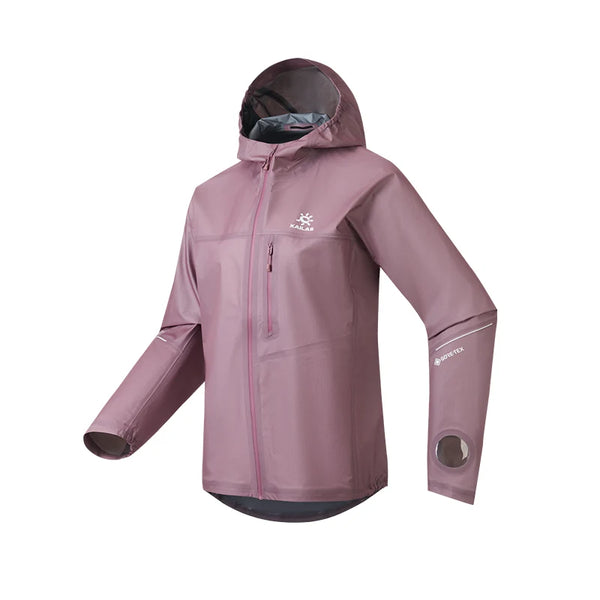
Best Lightweight Hardshell Jacket for Mountain Running: AERO Light
If your route is long and your kit is already full of essentials, a lighter jacket can make a noticeable difference. The KAILAS FUGA AERO Light series uses a 3-layer PERTEX® SHIELD laminate with an 18,000mm H₂O waterproof rating, taped seams, and AAC Lite ventilation.
-
Men's AERO Light: Weighing just 127g in size M, the Men's AERO Light Mountain Running Jacket sets a high benchmark for ultralight weather security. Ergonomic sleeve articulation and built-in mechanical stretch allow unrestricted movement, while an elongated drop tail keeps your lower back covered against trail spray and kicked-up mud. Fully waterproof YKK zippers round out this featherweight staple.
-
Women's AERO Light: Designed specifically around female running biomechanics, the Women's AERO Light Trail Running Hardshell Jacket pairs the PERTEX® SHIELD 3L build with contoured U-shaped cuffs and integrated thumb loops to stop sleeve slippage. With its vest-friendly pleated back, storm-deflecting visor, and drop tail, you get dependable alpine protection without hauling a single wasted gram.
Best Trail Running Waterproof Jacket for Mountain Running: AERO 1800
For daily training loops and fickle weather, you rarely need the bulk of a burly alpine fortress. The KAILAS FUGA AERO 1800 strikes that balance with proprietary weatherproof fabric backed by active venting to dump heat on the fly. Articulated elbows, off-shoulder seams that eliminate pack chafe, and a streamlined hood keep you moving naturally on steep ascents. Out back, the expandable pleat easily swallows a loaded hydration vest, while the cinchable hem and elastic cuffs seal out sudden drafts. The AERO 1800 Men's Jacket and AERO 1800 Women's Jacket feature dedicated fits for shoulder-season miles, canyon scrambles, and high-cadence weekend efforts.
|
Feature / Model |
AERO GTX |
AERO Light |
AERO 1800 |
|
Primary Membrane |
GORE-TEX 3L / Active 3L |
Pertex Shield 3L |
Proprietary Weatherproof Membrane |
|
Waterproof Rating |
28,000mm |
18,000mm |
10,000mm+ (Stormproof) |
|
Approx. Weight (Men's M) |
~203g / 7.2 oz |
127g / 4.5 oz |
~175g / 6.2 oz (Midweight) |
|
Ventilation |
Mechanical back vents + micro-perforations |
Mechanical back venting |
Integrated airflow venting |
|
Pack Integration |
Expandable zippered back pleat |
Expandable back pleat |
Expandable back pleat |
|
Best For |
Alpine deluge, exposed ridges & UTMB mandatory kit |
Fast-and-light racing & minimalist ultra kits |
Daily mountain training, shoulder-season miles |
How to Choose the Right Hardshell Jacket for Mountain Running?
Choosing the wrong jacket can leave you soaked from the outside—or drenched in your own sweat from the inside. When shopping for a trail running shell, watch out for these common pitfalls.
Choose the Right Waterproof and Windproof Protection
Waterproof ratings are measured by a hydrostatic head test in millimeters (mm of water pressure before leakage). For everyday mist, 10,000mm might suffice, but exposed mountain ridgelines demand at least 15,000mm to 20,000mm+ to prevent water from pushing through when strong winds drive rain directly into the fabric. Ensure the outer layer is matched with a continuous windproof membrane to arrest wind chill instantly.
Check Fully Taped Seams and Waterproof Zippers
Even the world's most waterproof membrane will fail if needle holes from manufacturing remain open to the elements. Inspect the jacket's interior: every stitch line along the shoulders, hood, and chest must be covered with heat-sealed waterproof seam tape. Furthermore, make sure the main front zipper is either a urethane-coated waterproof zipper (such as YKK AquaGuard) or supported by an internal storm flap with drainage channels.
Look for an Adjustable Hood with a Secure Fit
Nothing saps your focus like a floppy hood that snaps violently in the wind or slips forward to blind your peripheral vision. Look for a low-profile, running-tuned hood that fits snugly over your bare head or a trail cap. A semi-rigid, reinforced brim directs water away from your eyes, and a rear cinch or elastic perimeter prevents the hood from turning into an aerodynamic parachute.
Consider Breathability and Running-Specific Fit
Check the jacket's Moisture Vapor Transmission Rate (MVTR), targeting at least 15,000–20,000 g/m²/24h for high-tempo running. For female runners, an athletic fit that avoids excess fabric while allowing comfortable movement is particularly important when choosing women's running jackets. Be sure the pattern incorporates a slightly longer back hem to prevent exposure when you are bent forward on steep switchbacks, and look for pleats or expansions designed to comfortably accommodate a hydration vest underneath.
FAQ
How Do You Care for a Hardshell Jacket to Maintain Its Waterproofness?
Wash your jacket periodically with a specialized technical wash like Nikwax Tech Wash or Grangers, avoiding standard laundry detergents and fabric softeners. Regular household detergents leave behind chemical residues that clog microscopic membrane pores and ruin the surface DWR. After washing, tumble dry on low heat for 20 minutes (or follow garment care tags) to reactivate the water-beading DWR treatment.
Is a 3-Layer Hardshell Jacket Necessary for Mountain Running?
Not strictly mandatory, but highly recommended for severe conditions. Most ultra-trail race gear checks (such as UTMB) require taped seams and a minimum 10,000mm rating, which many lighter 2.5-layer jackets can satisfy. However, a 3-layer (3L) laminate—bonding the membrane between a protective face fabric and an ultralight backing—delivers far superior long-term durability and prevents the membrane from sticking to clammy skin or degrading from sweat and trail grit.
What Is the Difference Between a Hardshell and a Softshell Jacket?
A hardshell features an impermeable membrane with fully sealed seams built to block torrential rain and severe wind, whereas a softshell prioritizes warmth, extreme breathability, and stretch at the expense of true waterproofness. Softshells are fantastic for brisk, dry winter training, but they cannot keep you safe during sustained alpine deluges.
What Should You Wear Under a Hardshell Jacket When Running?
Wear a moisture-wicking synthetic or ultralight merino wool base layer directly against your skin to pull sweat away from your body. In freezing temperatures, you can layer a lightweight grid fleece or breathable active-insulation vest between your base layer and the hardshell. Avoid cotton completely, as it holds moisture and causes rapid chilling.
Can You Wear a Hardshell Jacket Over a Running Vest?
Yes, you should wear your hardshell over your running vest if the jacket features an expandable back panel or generous athletic cut. Wearing the shell over your vest keeps your soft flasks, snacks, and extra gear bone dry, prevents the vest's harness from compressing the jacket's waterproof membrane, and lets you take the shell on and off quickly without removing your hydration pack.