


Getting the best trail running shoes in 2026 is not all about good cushioning or a trendy brand. Today’s trail shoes feature a combination of innovative midsole foams, carbon propulsion plates, and extremely specialized outsole designs to handle everything from muddy forest trails to alpine mountain races.
Regardless of whether you are training for an ultra or just going out to have fun during your weekend run, having the appropriate pair will make your run significantly improve comfort,stability, and performance.
This guide breaks down how to make the right choice and reviews five of the best models of the year, analyzing their performance across various terrains and running styles.
How to Choose the Right Trail Running Shoes in 2026
Three factors drive the decision: terrain type, cushioning stack, and outsole design. Get at least two of these wrong, and the shoe will work against you instead of supporting you.
1. Identify Your Primary Trail Terrain
Wet roots, loose gravel, and muddy switchbacks need deep lugs and high-quality rubber compounds — Vibram MEGAGRIP is the standard reference point. On packed dirt, fire roads, or mixed road-to-trail conditions, that same aggressive lug pattern creates more drag than grip. Shallower-profile outsoles work better there and feel more responsive underfoot.
Think about where most of your runs actually happen, not where you'd like them to happen. A lot of runners buy for the hard day and regret it on every other run.
2. Selecting the Right Cushioning and Support for Your Run
High-stack supercritical foam midsoles reduce impact fatigue over long distances. They are genuinely useful past 50K, less necessary for shorter efforts where ground feel matters more. Lower-stack models are sharper and more agile on technical terrain, at the cost of more cumulative load on the legs.
Heel-to-toe drop is a separate variable. A 5mm drop suits runners with a natural midfoot strike; 8-10mm is usually more comfortable for anyone coming from road running with an established heel-strike pattern.
3. Evaluate Outsole Grip and Protection Features
Lug depth and pattern affect braking, lateral grip, and forward propulsion differently. Multi-zone lug systems address all three; single-pattern outsoles usually prioritize one.
Rock plates protect against sharp stone strikes on technical terrain, but not every trail shoe has one, and not every trail needs it. Reinforced toe caps and overlays extend durability on rugged ground where fabric uppers take a beating.

5 Best Trail Running Trainers of 2026
Here are five of the best trail running shoes of the year, each designed to meet the needs of different runners.
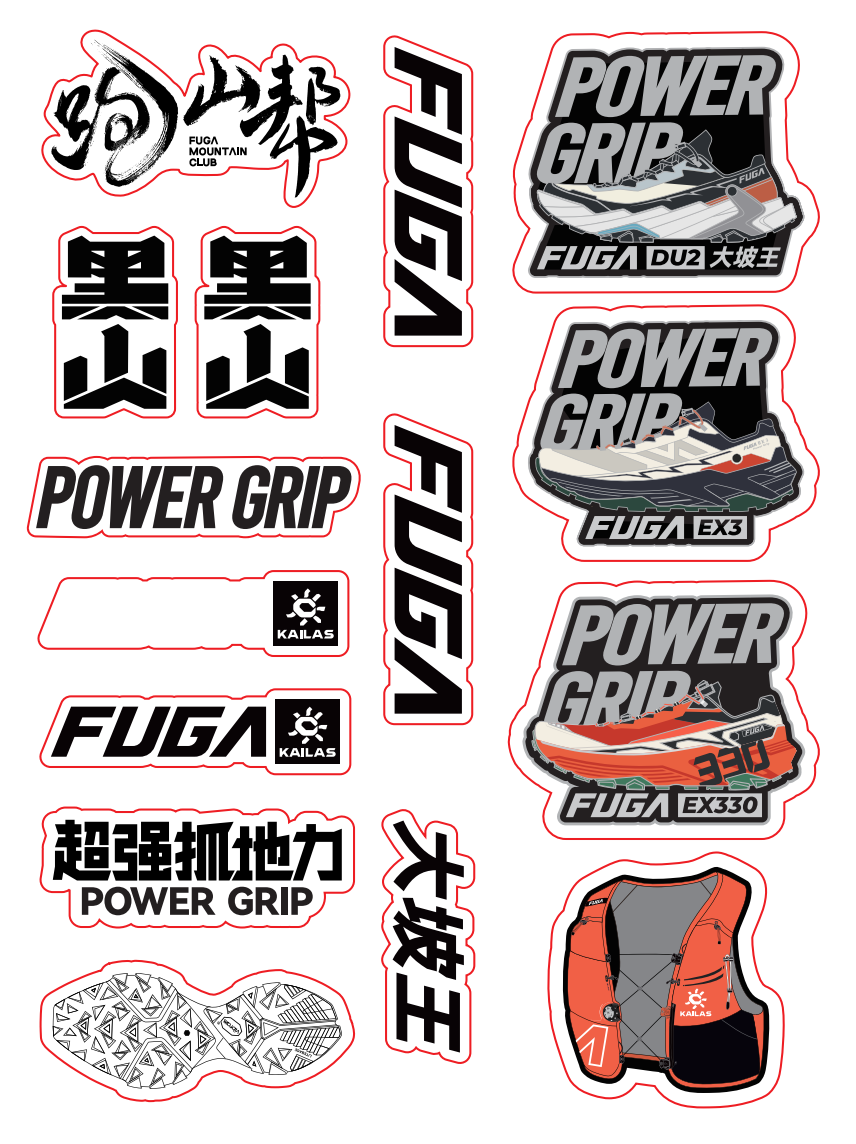
1. New Kailas FUGA EX 3 Trail Running Shoes
The EX 3 is designed for mixed terrain and daily training, making it the most versatile option in the Kailas lineup. Vibram MEGAGRIP outsole with 4mm lugs handles the grip side across wet and dry surfaces without the drag of deeper lug patterns on packed dirt. The widened forefoot and heel platform add stability without noticeably adding weight.
ECCEVAI midsole gives balanced cushioning with better rebound than previous foam generations. An 8mm drop works for a wide range of stride patterns. The AWS 3.0™ two-section tightening system locks the midfoot specifically, which is relevant on steep descents where the foot tends to creep forward into the toe box. Reliable across varied terrain without specializing heavily in any one condition.
2. New Kailas FUGA EX 330 Trail Running Shoes
Where the EX 3 is balanced, the EX 330 prioritizes protection and cushioning for long hauls. The supercritical foam midsole is thicker than the EX 3's and delivers higher rebound, which becomes crucial when the legs are already deep into a 50K and impact fatigue starts compounding.
The EX 330 outsole uses Vibram MEGAGRIP and LITEBASE technology to reduce weight while the Traction Lug construction handles aggressive grip. The 5mm drop suits a natural midfoot strike, and the dual-depth lugging (6mm on the sides, 4mm in the center) provides bite on muddy and technical terrain without feeling clunky on transitions. Built for runners targeting 50K and above.
3. Kailas FUGA EX PRO Mountain Running Shoes Unisex
The EX PRO is a carbon-plated trail racer built for speed and precision. Its X-shaped carbon plate is embedded within a supercritical TPU midsole, delivering powerful propulsion on climbs and efficient energy transfer across technical descents. Weighing in at under 275g(EU42), the EX PRO remains impressively lightweight for a carbon-plated trail shoe.
Vibram MEGAGRIP and LITEBASE keep grip without adding the weight of a full rubber outsole. The 5mm drop keeps the shoe low to the ground on ascents and descents. Not built for everyday training volume, as the plate and midsole combination is optimized for race pace, and the durability reflects that. Best used on race day or for speed-focused sessions where the performance trade-off makes sense.
4. Kailas FUGA DU SPEED LOW Trail Running Shoes
Built around PEBAX® supercritical foam and Vibram MEGAGRIP and LITEBASE rubber, the DU SPEED LOW delivers responsive cushioning and reliable traction. PEBAX® returns energy faster than most EVA-based foams and stays consistent across temperature changes, which matters on long days when conditions vary. The TPU heel support frame adds rearfoot stability and supports quicker lateral footwork on technical terrain.
With an 8mm drop and a lightweight build, it suits runners who want speed on technical trails without the bulk of a max-cushion construction. The trade-off is less impact absorption than the EX 330, which is fine for shorter distances, but harder on the legs over very long efforts.
5. Kailas FUGA YAO SPEED Low Trail Running Shoes
The YAO SPEED Low sits at the road-trail boundary. Its X-shaped carbon plate and dual-density PEBAX® foam provide propulsion characteristics closer to a road racer than a mountain shoe. Weighing around 265g(EU42) with a 10mm drop, it's the lightest and most road-oriented model in this group.
Shallower lugs handle compact dirt and gravel well. They won't hold in deep mud the way the EX 330's aggressive pattern does, but for runners who regularly move between light off-road sections and paved surfaces in the same run, that compromise is the whole point. Switching into dedicated trail shoes for full mountain days still makes sense, but for mixed-surface training routes it removes the need to change footwear.
What Is the Difference Between Trail and Road Running Shoes?
Even though they may appear similar at first sight, trail and road running shoes are designed to perform under different conditions and training styles.
1. Flexibility and Ground Responsiveness
Trail running shoes are designed to cope with complex and uneven terrains, where outsole traction plays a crucial role. They usually feature deeper and more aggressive lug patterns that improve grip and reduce the risk of slipping on surfaces such as mud, rocks, roots, and loose gravel. This enhanced anti-slip performance enables runners to maintain stability and control in challenging environments.
In contrast, road running shoes are optimized for smooth and predictable pavement. Their outsoles are generally flatter and smoother, focusing on flexibility and efficient heel-to-toe transitions rather than strong traction. As a result, compared with road running shoes, trail running shoes are better suited for handling a wider range of complex ground conditions.
2. Differences in Upper Construction and Breathability
Trail shoes typically feature rigid TPU overlays and reinforced toe caps that protect against debris and rock strikes. This added construction makes trail shoes more durable than road shoes in harsh conditions.
The priority of road shoes is to have lightweight mesh that provides comfortable airflow and comfort. Pavement running has fewer obstacles, so they do not require as much protective layering.
3. Comfort Differences over Long Distances
Feet swell during long efforts and slide forward on descents. Trail shoes account for both: a secure midfoot lockdown keeps the heel planted, while toe box room prevents jamming on the way downhill.
Road shoes are cut more uniformly since the foot's behavior on flat pavement is more predictable throughout the run.

Common Mistakes When Choosing Trail Running Shoes
Even seasoned runners make the mistake of choosing the wrong shoe considering the wrong aspects.
1. Choosing Based on Cushioning Alone
More cushioning doesn't help if the outsole can't hold on wet rock. On technical or muddy terrain, grip and lateral stability have more impact on how a run actually goes than stack height does. The two need to be balanced for the terrain, not maximized independently.
2. Ignoring Fit and Toe Box Space on Technical Trails
During a downhill the feet naturally slide forward and can swell in cases where the running is prolonged. A tight toe box can cause pain, blistering, and black toenails. A common issue for trail runners on long descents where the foot slides forward. Ensure that you have just a little space in front of your toes and keep the heel and mid foot stable.
3. Overlooking Outsole Design for Specific Terrain
Deep aggressive lugs on hardpack create drag and uneven wear. Shallow lugs on wet mud fail to provide grip. Most trail runners spend 80% of their time on one type of surface and buy for the 20% they think is more exciting. Match the shoe to the runs you actually do most often.
FAQs
1. How Long Do Trail Running Shoes Last?
Trail running shoes typically last between 300 and 500 miles, though rocky terrain and heavier runners push toward the lower end. The upper usually looks fine well past the point where the midsole has gone flat. Press a thumb into the foam and if it barely compresses, the shoe's worn out regardless of how the fabric looks.
2. Are Trail Running Shoes Good for Hiking?
For fast hiking and light trail work, yes. The FUGA EX 3 handles that without needing to swap footwear. Pack on a multi-day trip with significant elevation and real load though, and trail running shoes don't provide the ankle support that kind of outing puts stress on.
3. How Tight Should Trail Running Shoes Fit?
Snug through the heel and midfoot, with about a thumb's width of room at the toe. Feet slide forward on descents and swell over long efforts. A toe box that fits perfectly in the store produces black toenails by mile 15 of a race so err on the side of more room up front.
Conclusion
The right trail shoe comes down to terrain and distance, not brand loyalty or spec maximization. The FUGA EX 3 covers the widest range of conditions for everyday training. The EX 330 earns its thicker midsole over ultra distances. The EX PRO is purpose-built for race day. The DU SPEED LOW and YAO SPEED Low serve faster, lighter efforts on technical and hybrid terrain respectively. Pick the profile that matches the running you actually do.
Read more

You may have been asking yourself how to start trail running, and you are not alone. Most runners who try trails stop going back to roads. The terrain demands something pavement never does: actual ...

In contrasting hiking boots vs trail running shoes, a lot of outdoor enthusiasts would have in mind which shoe is superior for their outdoor activities. The two are off-road designs with varied pur...
Leave a comment
This site is protected by hCaptcha and the hCaptcha Privacy Policy and Terms of Service apply.